Monday, March 31, 2014

Universities: a potential that is not tapped

, the island

article_image
An undergrads’ protest

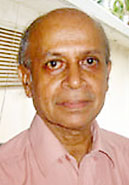
By Chandrasena Maliyadde, Former Secretary, Ministry of Plan Implementation

I have never had any political clout in my life. Only politician known to me as a child was one "Girigoris" who always contested from SLFP ticket for Village Council (Gam Sabhawa) and he was always the loser. When I was in public service I was always identified as a sympathizer of the opposition party whatever the opposition was.

Who I am today is completely due to the free education provided by the state. There were more than 40 students in my class and they were all from low income families. Only three of us entered the university. We got better remunerated jobs in public sector. Others, except a few who joined as teachers, ended up getting back to their parents’ low paid jobs in the informal sector. I was then ‘machang" (buddy) to my classmates and now am a "mahattaya" or "sir" for them. This is the inequality created between equals by free education.

The Sri Lankan economy Ceylon at the time of introduction of "Free Education" was a relatively prosperous country with manageable fiscal and trade deficits, acceptable levels of inflation and tolerable unemployment. The country was at par or ahead of its Asian neighbors. Sri Lanka today is a lower middle income country with a per capita income of nearly US $ 3000. The official data and statistics show a low and decreasing poverty ratio and an unemployment rate. There are many state run programmes to improve the infrastructure to modern standards. Sea ports, airports, highways, flyovers, road rehabilitations, and multi- source electricity generation projects are all around us. Projections indicate increased numbers of tourists, FDI, export earnings, and foreign remittances. The country shows signs of modernization. An average annual economic growth of 8% is expected in the coming years. Sri Lanka is on the verge of becoming the Wonder of Asia.

Yet, reality often deviates from the story conveyed by data and statistics. Is our agriculture modernized? Have we introduced new technology in industry? Have we adapted inventions and innovations into our manufacturing process? Are we on a competitive footing in our manufacturing, trade and services? Does education and training cater to our needs? In brief have we adapted ourselves to the trends and needs of a new millennium and the global village? We can continue with such questions. Response to most if not all of them will be in the negative.

Who is responsible? Is it the politician, public service, corporate sector, donors, I/NGOs, universities or the general public? I believe that all of us should take a share of the responsibility. Since the cream of intelligentsia is within the university system (I hope the politician would not be offended for not referring to the least) I would like to examine the role played by the higher education/ universities in this scenario.

Since independence, there has been considerable expansion in university and tertiary education. The number of universities has increased with more faculties, institutes, schools, centers, departments and teaching streams. Staff and student population has risen. According to UGC records, there are 500 full time professors and 200 associate professors among a large community of academics of other grades and academic support staff within the university system. Infrastructure facilities, funding availability, programmes, projects and activities have improved tremendously. There has been continuous curricula development and introduction of modern teaching techniques.

Universities can contribute immensely and numerous ways to national development. I highlight three ways.

* Generation of employable, entrepreneurial, skillful human resources (direct output)

* Conducting practical research which addresses the societal/industry needs.

* Advice and expression of critical, professional unbiased views on national issues

Generation of human resources

University graduates can contribute to national development by being productively employed in gainful opportunities. Our university graduates except in a few streams are not in much demand. Corporate sector does not feel that graduates could add value to their enterprises, and prefers lesser educated urban based youth with extracurricular activities and skills. Graduates do not feel secure, and confident that they could deliver to the satisfaction of corporate sector employers. The public sector is overstaffed with no room for creation of additional effective employment avenues. Every government has absorbed unemployed graduates as graduate trainees and attached them to government institutions without any rationale. For instance graduates who have specialized in agriculture are looking after rural industry. There are many graduates who do not have a specific job or even a chair.

Universities have thus failed to produce skillful human resources equipped with modern technology, rational thinking, practical knowledge and readiness to take up challenges and leadership. Changes introduced to curricula and syllabuses over time are inadequate if not negligible. Skills and practical knowledge imparted on students other than narrow subject-specific knowledge is marginal. No soft skills are taught. The Universities have little or no contact, rapport with industry, with the policy maker and with the society at large. Industry, policy maker, society and the university are in their own isolated silos. Graduates who are produced in one silo are lost and alienated in other silos.

Conducting research Research is pivotal for modernization, innovation, invention, initiative, technology and finally for change and development and to move along with global and local trends. University academic and research community produce a considerable volume of multi-disciplinary research. Producers (in agriculture and manufacturing), service providers and the public sector are the potential users of the research outcome. But there is a gap between the producers and users of research outcomes. What are the causes for this gap?

First is that there is no acknowledgement for the need and the importance of research across different strata of the society. Agriculture largely consists of peasants and smallholders. They are merely passive recipients and dependents of state subsidies and handouts. Their dependence on research is minimal.

The manufacturing sector has not shown much evidence of using research output. Foreign investment brings its own technology. The Small and Medium Sector Enterprises normally resort to their indigenous and conventional methods of production, and occasionally seek assistance of facilitating bodies such as the Industrial Development Board. The local industries more often than not depend on imported machinery and equipment which come along with the technology. Further, Sri Lanka does not have a large local manufacturing sector.

The service sector is modernized, mechanized and is the largest sector contributing more than 60 per cent to the GDP. The service sector has its own human resource development programmes and access to numerous training organizations, expatriate resource personnel, online services and information through internet. The sector does not approach the academia for research and advice.

The public sector does not seek the involvement of universities and their outputs. One reason is that the public sector has its own research organizations. Interaction and links between these research institutes and universities is absent. There is hardly an opportunity to share the expertise and the experience between these two types of institutes. Coconut Research Institute conducted research and studies on the coconut wilt disease spreading in the Southern Province. The University of Ruhuna which has a well developed Faculty of Agriculture and was readily available on site was neither consulted nor involved in any study or research. There is at least one university in each province. But no Provincial Council has involved university for their development programmes.

By and large research has not been given high priority by the society. The dependence on, and therefore, the demand for research is weak and erratic. Universities which are knowledge banks with a huge research capability and output and a pool of human resources have not been in demand by the society. Society has failed to acknowledge the need and importance of research, thereby leaving universities in the lurch in its development drive.

The second issue is related to the relevance of research conducted in universities. Society does not inform the universities what research is required. universities do not search for what research is in demand by the society. The research conducted by universities is academically rich and theoretically sound, but practically of limited value. Most research is not multidisciplinary. There is limited awareness among the rest of the society outside the university on the research conducted. Research Symposiums are conducted within walls of the university lecture halls with limited access to potential users outside. Valuable and productive research will end up on a library shelf.

Acknowledgement, Availability, Awareness, Accessibility, Affordability and Adaptability are issues always related to research and restricts application of research findings.

Advice and expression

of views

The global economy has been in turmoil since 2008. Being part of the global economy with an open economy model, Sri Lanka has, no doubt been, deeply affected by recent financial and economic crisis. Central Bank has been the sole spokesman expressing its own views and making interpretations and explanations. No alternative views came out. Universities have lost an opportunity to study, research, analyze and come out with alternative views for the benefit of the public. There have been no research or discussions conducted in university corridors on this. No professional alternative views and potential solutions seem to have been discussed. The public was compelled to accept the opinion of the Bank.

In the face of current widening trade deficit it is unfortunate that our universities have failed to make opinions or offer advice. The issues connected to current droughts which affected hundreds of thousands of farmer families in the dry zone, irrigation, power and drinking water are not discussed in our university corridors. It was only politicians and bureaucrats who expressed their views. They are excuses and explanations rather than views and solutions. This is in a country where there are many Faculties of Agriculture, Engineering, Science, Management and Economics.

How much do we hear from universities on Geneva Fiasco, Debt Trap, merger of financial institutions, widening trade, fiscal deficits?

Sri Lanka has failed to keep pace with global trends and challenges, and be responsive to local needs. The nation has invested heavily and pinned high hopes on education, especially at the university level. The dream of many children and parents irrespective of their social class, economic profile and location is the "university". Unfortunately, the Ministry of Higher education is not happy; the University Grants Commission is not happy; university staff, both academic and non-academic, are not happy; Industry is not happy; Parents are not happy; undergraduates are not happy; and graduates are not happy. There is hardly anyone who is happy about the outcome of the university education system.

The university system absorbs the cream of our education output. Students enter the university as bright, courageous, ambitious and promising youth and exit as desperate, pessimistic, and broken persons. Youth leave their familiar society and surroundings to join an alien society and environs. At the time they left they were very much part of the society. They return to find an alien society unable to integrate with it. Their flexibility has disappeared with changed attitudes.

(The writer can be

reached on chandra.maliyadde@gmail.com

Sunday, March 30, 2014

Education under attack?

, SundayIsland

article_image

An interview with Dr. Rohan Fernando, General Secretary, FUTA

By Maheen Senanayake

When I entered the premises of the Open university, I entered a different world - one that was expansive, and in some ways one of solitude. Finding the right building was no easy task, but disabled and on crutches, albeit temporarily, I found getting on to the second floor of the natural sciences building daunting. Despite the elevator, the architectural nightmare needed a little more attention. Close inspection revealed that it was wanting of resources for maintenance. Dampness was home to mildew and moss.

I finally found Room 211, the home of the FUTA, the cubicle within which the humble Dr. Rohan Fernando, as I later found out only much later, put off his lunch until much later in the afternoon due to my arrival ahead of schedule.

Whatever he lacked in height he made up in stature, and there was a down to earth charisma about him that was immediately apparent. He was charged yet restrained and never in a hurry. His voice also carried, which meant he could modulate it at will – a mandatory requirement if you were going to marshal troops on the ground. His demeanor was exemplary.

Can you tell us about the FUTA’s beginings?

Well to the best of my knowledge, the FUTA was founded by Professor Osmund Jayaratne in the late 1980s. He understood the need for a FUTA as a timely requirement at the time, to safeguard the rights of academic staff. Subsequently, prominent figures also contributed substantially namely, Professor Sarath Amunugama, Dr. Nalin De Silva, and Prof Carlo Fonseka. The focus at the time was on the professional rights of the academic. One of the major victories of the day was turning the then book allowance into an academic allowance. The academic allowance was calculated on the basis of pay and at that time was calculated at 30%. Another success was the FUTA’s efforts to abolish the Colombo North Medical College in the early nineties. That was also, in my opinion, a great success.

So do you think it was right to abolish the private university?

Yes, I will give you a simple answer. In countries like Sri Lanka, after 1977 when the open economy was introduced, which I call new liberalism people changed education from a service to a marketable proposition. There was a lot of evidence from other countries and the same thing was happening here. We also felt that before the establishment of the private university, the national universities needed a lot of improvement including the state education system.

When the FUTA moved for abolishing the Colombo North Medical College, the principal proponents against its establishment included Rajitha Senaratne, the then president of the GMOA, Professor Carlo Fonseka and the third person was Prof Osmund Jayaratne.

When did this focus change?

Well the FUTA believes that there is both a workers’ struggle and a national struggle. We also feel that the national struggle has taken precedence over the rest. That is why now we are in the process of consolidating our line of thinking over the national struggle.

So what was the purpose of the trade union actions during the last year?

Having recognized the need for a national struggle we stepped out to reach the masses. Our aim was to educate the masses on how education is under attack.

Do you think the FUTA is connected with the masses?

Well if you consider the PadaYathra and how across days people of all walks of life showed their solidarity with the cause and how the marchers swelled into thousands when we reached Colombo, I would safely say that ‘yes’ we managed to create awareness.

So did you win? Did you get your 6% of GDP pumped into education?

I can safely say that we did not win. Despite assurances the government has resorted to blatant lying. So it is fair to say that the government is shameless and the subject ministers have absolutely no shame. What the people have to realize is that they are not committed to the welfare of the people. Furthermore, even within FUTA the political alliances within are a reflection of the political alliances outside so there are many within also who will not pursue sustained action against this government. There are agents of government within our own membership.

What is your take on the Minister of Higher Education?

He has openly stated that he is for the sale of education. If you refer to the Divaina of November 24, 2013 he says so in an interview. Then there is the minister of education and the deputy minister of education , both nice people but both tuition masters in whose hands now rests national and public education. Do I even need to explain what the consequences could be?

What do you think is wrong with education in Sri Lanka?

My father was a clerk and I studied in the village school. I got through the grade 5 scholarship exam and then managed to get into Ananda and finally enter university. That was then. But today the situation is different. We believe that if there is a child whose father is a clerk today, the system does not provide equal opportunity to the extent that that child will have the same chances of at least reaching where I have in this system. To support that I must say that I never went for supplementary tuition classes even when I did my Advanced Level examination. Another point to be made is that I didn’t have money to go for extra classes but the system managed to provide the education I needed to enable me to receive a university education. In other words the first thing that we feel is that we must ensure a common standard for all schools. We must do away with this concept of central colleges and popular schools ideology. The central college concept was suitable during the 50s. It was a good system then. We have to put our efforts back into proper infrastructure, training the teachers and equipping our schools. There has to be a master plan.

What about government allocations to universities?

Well this is another area that is very grey. The public has the right to know. But according to figures from sources I cannot yet mention, the capital expenditure on a student at the KDA is about 88 times that spent on a student in a national state university. Capital expenditure on a single institution like the KDA is almost more than what the government spends on the rest of the universities put together. Our question is ‘why?’ Why are these details not transparent? And why the disparity?

What is FUTA’s position on education?

This is a Federation of 41 Associations with a membership of slightly over 4,000. Given the diversity of our membership we have managed through dialogue at the executive committee level to maintain certain stands on key issue. The first of these is really the strengthening of the state universities. The need to spend 6% of GDP is towards that end.

What did you learn from strike action so far?

Well we had understood both the reality and the narrative of trade union action. We have all seen trade unions in action and some of us have been active members even from our university days. Our greatest learning perhaps is that people began to understand the need to put education back on track. Another thing is that we were able to show those below about 35 years that we can make a difference. We also showed that we were a worthy social movement, perhaps one able to make a political difference. We began our pada yathra from Galle and hoped to finish with the same 200 at least. We received such unbelievable support that there were thousands who joined us by the time we ended the pada yathra. This is why we say that FUTA is a political force to reckon with, one that can in fact bring together or perhaps even unite those with diverse political affiliations for the cause.

What is the origin of the 6%

Well UNESCO published "Learning: The treasure within’’ in 1996 - a document which was put together by the Commission on Education for the 21st Century. The argument for the 6% begins here. The Fifth International Conference on Adult Education held in Hamburg in July 1997 resolved the adoption of this figure under Theme 9, ‘The Economics of Adult Learning’ and finally the sixth International Conference on Adult Education held in Belem, Brazil in December of 2009 adopted this figure under theme 14 on financing.

As I left

When I left that room that day, it was a sad day indeed. On crutches after breaking a leg failing to get off before the bus sped away, (apparently that is the norm now) I pondered over the attack on education. Are we blind? Are people blind? Are the people helpless? I remembered Woodstock when artists and activists attempted to give power to the people. Then as I was getting back into my cab I saw the election posters, and thought ‘ by god, the vote’ Does that not give power to the people? Frankly I do not know.

Education reforms.

In the car I read a letter by Dr. Rohan Fernando to Dr. Sunil Jayantha Navaratne, Secretary, Ministry of Higher Education dated February 3, 2014. It read " It has been reported in the newpapers that the Ministry of Higher Education has sent a document proposing changes to the University Act to the Legal Draftsman. Furthermore, a Gazette notice has been tabled on the 31st or January 2014, amending Rule under Section 137 of the Universities Act No. 16 of 1978. We would like to remind you that when FUTA agreed to call off its trade union action in 2012, the agreement reached between the government and the FUTA was that the Ministry of Higher Education discuss any higher education policy changes with FUTA through a Special Presidential Committee. The Cabinet paper submitted by Minister S B Dissanayake and Minister Basil Rajapaksa proposes to establish a special commission to develop higher education policy reform…"

I lose interest. Why the hell is this other chap involved in higher education I ask myself, but then it does confirm the minister’s incompetence.. he needs help apparently. I browse lower, I continue reading;

"The latest Gazette allows for private institutions to be established without obtaining compliance from specified professional bodies. …"

I am now at Narahenpita and through the windows of the least safe car in the word I take in the majesty of the Lanka Hospitals as Dr. Rohan Fernando’s words ring in my mind ``…. education, transport and health should be a social service and run by the state".

Folks I leave you with a poem in Amartya Sen’s book, the idea of justice, a book I had no idea existed until the voice of Prof Carlo Fonseka, introduced me to it.. and I might add apoen recited to me by heart.

Adam, Adam, Adam Smith

Listen what I charge you with!

Didn’t you say,

In a class one day,

That selfishness was bound to pay?

Of all doctrines, that was the Pith.

Wasn’t it, wasn’t it, wasn’t it, Smith?

--Stephen Leacock


Friday, March 28, 2014

VC Election In Jaffna: An Open Season For Academic Suicide

Filed under: Colombo Telegraph,MORE OPINION,Opinion |
 
By A group of concerned academics, Jaffna -

The health of an academic institution calls for norms and restraints to be observed in social behavior, checks to be enforced and a readiness to be accountable when well-founded complaints of impropriety are made. In this spirit, when a Vice Chancellor is to be elected, the university community has a right to know the strengths of the contestants and expects the electors – the Council – to listen to them and to vote for the most qualified candidate in the best interests of the University.

Sadly, what we saw in Jaffna University recently, was leading members of the Council working through a government-aligned political party to abuse the Vice-Chancellor’s office to coerce voters. One of the tactics used was to put forward a mostly unknown dummy candidate who obtained the second highest vote. The result speaks for itself. The level of desperation to forestall any change in the university administration is a pointer to a need for radical overhaul.

The Election

The contestants at the election were the incumbent Vice-Chancellor Prof. Vasanthy Arasaratnam (VC), Prof. Vigneswaran and Dr. Alvapillai, from the University; Dr. S. Gunapalan, Head of Management and Commerce at South Eastern University and Dr. Ratnajeevan Hoole, Professor of Electrical and Computer Engineering, Michigan State University, who had previously stood for election in 2010. Arasaratnam and Vigneswaran, as candidates, were barred from voting as members of the University Council of 27 persons, leaving 25 council members entitled to cast a vote each for a maximum of three candidates of their choice. Names of the three receiving the highest votes were to be sent to the President, who made his choice from among the three.

Douglas and Rajapaksa

The Council had 14 external members who were appointed by the President and 13 internal members, including the deans and senate representatives – only 11 of the latter were entitled to vote after VC Arasaratnam and Vigneswaran were recused. Since 2007, the appointment of external members to the University Council of Jaffna University became a matter of EPDP patronage. The EPDP is a northern regional party and member of the current government. The EPDP has maintained a tight grip on the external members, who before each monthly council session are required to attend a pre-council meeting, chaired by the EPDP. At one or more pre-council meetings before each election of a Vice-Chancellor, the EPDP has made recommendations on how the external members, who comprise the numerical majority of the Council, should vote. A Vice-Chancellor is unlikely to have a second term if he or she loses EPDP patronage. During the 2010 election the EPDP shifted its patronage to Vasanthy Arasaratnam resulting in her predecessor losing office.

Following the Council meeting in February 2014, it was rumoured that current VC, Vasanthy Arasaratnam had lost the patronage of the EPDP and that she had subsequently made renewed pledges  to the EPDP Leader, Minister of Traditional Industries and Small Enterprise Development, Douglas Devananda. This was confirmed by the EPDP leader himself in remarks made at the pre-council meeting, the day before the election was held, on 7th March 2014.

The rapprochement between the VC and the EPDP leader reported above had further ramifications for the politicization of the University. Faculty were told by council members and senior academics that two internal council members (and perhaps others) met Minister Devananda and pleaded with him to support VC Arasaratnam.

Ratnajeevan Hoole appears to have been a threat to VC Arasaratnam. He had contested in 2010 and as one of the top three vote-getters, had been selected to be Vice-Chancellor by the President. Under the advice of Minister Devananda, however, the President changed his mind and named Vasanthy Arasaratnam Vice-Chancellor instead. According to council members and senior academics, one of the deans was tasked by the VC to find a dummy candidate, whose coming among the first three would not be a threat to Arasaratnam but would exclude Hoole. This resulted in the successful dummy candidacy of Dr. Gunapalan, who would indeed score the second largest number of votes.

Friday 7th March 2014: The Pre-council meeting and after

In a pre-Council meeting on March 7th, Minister Devananda addressed the 14 external members, and gave a history of how various candidates had approached him. He said that VC Arasaratnam had met him and emotionally appealed for his support, confirming earlier rumours of his second thoughts about her. Hoole, he said, had written to him to put behind their personal differences but had failed to publish an article under his name declaring his support for Minister Devananda and the Government. According to Minister Devananda, Vigneswaran had approached him through an intermediary a week earlier, and he had said it was too late to support him at the election, but on a subsequent contact, Minister Devananda had promised to do something. This resulted in a change of plan.

The Minister’s initial plan was reportedly to ask the 14 external members to cast their three votes, one each to VC Arasaratnam, Gunapalan and Alvapillai. In the changed plan VC Arasaratnam, the dummy candidate and Vigneswaran were each to receive a vote from all the external members.  The Minister wished to exclude Hoole, but had evidently not shown overt preference for VC Arasaratnam, who became alarmed by the change of plan. Other sources contend that two council members, whose names are known, had been tasked to give one vote each to VC Arasaratnam and Alvapillai and withhold the third vote.

Having announced the new plan, Devananda addressed a question to the two senior council members whom he suspected would act independently, “So what do you think?” One of them answered, “Since you were the one that appointed me to the Council, I have to do as you say. But I have one reservation. I do not know this person Gunapalan at all. How can I vote for him?” Devananda answered that he need not, and asked him to give one vote each to VC Arasaratnam and Vigneswaran.

The other senior member whose obedience was in doubt had from time to time, privately voiced strong criticism of irregularities on selection boards and had kept off some of them, saying that he would, if he participated, become party to cheating and corruption at the University. To the Minister’s probing question, he said that he would vote only for those who had been in Jaffna throughout.

One of the Deans in conversation with other faculty members, and not knowing of Minister Devananda’s change of plan, referred to the initial plan and said that Vigneswaran may not get any votes, and ‘if he gets one, it would definitely be mine’.

Evidently, someone impressed upon Minister Devananda the need to call up the internal members and instruct them on how to vote. VC Arasaratnam had in fact called at Devananda’s office after the pre-Council meeting and left at about 7.30 PM. Devananda’s calls to internal members went on into Saturday morning, the day of the voting. Some reported that these were courteous. Others got curt instructions not to vote for Hoole.” But Devananda did not seem inclined to openly exclude Vigneswaran.

Arasaratnam was confronted with a situation where the internal preferences might enable Vigneswaran to poll more votes than her. She resorted to calling some of the internal members at about 8.00 to 8.30 PM, shortly after leaving the EPDP office. Asking someone to vote for her was perfectly legitimate, but as a candidate, she took the questionable step of telling persons to vote against Vigneswaran on personal grounds. She called one Dean and asked if he would vote for Hoole. The Dean replied that he would give one vote to her and one to Vigneswaran. Taken aback, she asked whether another prominent Dean had not called him and told him about the latter plan to vote for her alone?

When the voting took place the next day, VC Arasaratnam obtained 24 votes.  Only one among all the voters had not voted for her. Gunapalan obtained 16. It is likely that he obtained 11 from the external members and five from internal members. In the end the dummy candidate had creditably done well enough to be appointed Vice-Chancellor. Vigneswaran obtained 13 votes. The facts above suggest 12 from external members as directed by Minister Devananda, and just one from an internal member. Hoole and Alvapillai got two votes each.

Consequences of the Election

Sections of the university community have until now challenged the Administration on corrupt practices in academic appointments. Among them are the cases of Surenthini Sithamparanathan who was rejected for the post of Probationary Lecturer in Sports Science, and Miss. Nilani Kanesharatnam for Probationary Lecturer in Zoology. The Vice-Chancellor cancelled the appointment of the candidate chosen for Sports Science after Miss. Sithamparanathan pointed out irregularities that were blatantly problematic in a letter to administration. The candidates were re-interviewed at the end of the year. Both Miss. Sithamparanathan and the previously selected candidate, together with the rest, were rejected on the grounds that their subject knowledge was inadequate. How a candidate previously selected as suitable for the job could a short time later be found unsuitable by almost the same selection committee is a mystery. The abuse involved in selection boards, sometimes having no representatives with any subject knowledge, passing judgment on well-qualified candidates as having poor subject knowledge has been raised.

In place of Miss. Kanesharatnam who had a first class and a gold medal from this university, a candidate far inferior was selected. Letters of protest to the Council, from the candidate herself in December 2013, and subsequently by the JUSTA have been ignored. Both the Vice Chancellor and one of the Deans involved in vote-engineering have been leading members of all selection committees above. This leads to a grave question.

Integrity of Appointments and Elections

One sees practically no dissent in our selection committees. Take the Vice Chancellor’s election, where the voting was fixed. Calls to internal members by Minister Devananda, and the Vice Chancellor herself, had a strong hint of unpleasant consequences. The fears of those they called are very real. The voting was on single-sheet ballots where electors selected up to three names. These ballots are held by an administration whose top officials have regular commerce with the EPDP office. The EPDP knows how the external members voted. The voting of at least four commonly-known servile deans would also enable the EPDP to make inferences about how the remaining half a dozen internal members voted.

The matter has been especially troubling in recent years when the Council and university selection committees approved political appointees for the non-academic staff positions who fared miserably when tested and interviewed by the University community. The level of coercion in the system is most obvious among the non-academic staff. There has been intimidation of members of the non-academic staff union who protested against abuses in selections. Once the EPDP obtained a virtual monopoly of staff appointments, new appointees who did not join the new EPDP set-up union have been threatened with transfers to Vavuniya or Killinochchi. These threats will eventually be enforced through the Administration.

Most scandalous is the fact that forces that have no real interest in our education, the future of the society, or the University, will even more have a monopoly over the administration and appointments to the University. This is all done cynically. Cynicism about the persons they appoint to high office is readily seen from the manner of the Vice-Chancellor’s election. Under the present dispensation, we could expect the Council to blatantly ignore all protest against abuse. We could expect a disastrous escalation of bad candidates smuggled into academic positions with total impunity. The University’s future is indeed bleak.

The role of the academic and non-academic staff who have been smuggled in can be seen in their hostility to the unions, their unquestioning advocacy of those in power, and their reliance on political patronage for career advancement. Once we show the politicians that we are corrupt, there is no reason why they should not take over all appointments, as they have done for non-academic staff and the running of the Council itself. After the recent election, we should have no illusions. The public spends two lakhs of rupees on each student in a year. Can our increasingly corrupt and politicized universities give them their money’s worth? Or have we become frauds taking the public’s money to spread corruption into the body politic while giving paper degrees of little worth?

Thursday, March 6, 2014

‘Appoint Ratnajeevan Hoole As Senior Professor Of Computer Science’ – JUSTA

Filed under: Colombo Telegraph,News,STORIES |
Following the rejection of Ratnajeevan Hoole’s application for the post of Senior Professor of Computer Science, the Executive Committee of Jaffna University Science Teachers’ Association seeks the UGC’s intervention and urges upon the University of Jaffna to appoint him as Senior Professor of Computer Science on the basis of his senior professorship at Peradeniya.

The Executive Committee of Jaffna University Science Teachers’ Association yesterday wrote to the Chairman and Members of the UGC.

We publish below the letter in full;

March 5, 2014
The Chairman and Members of the UGC
Rejection by University of Jaffna of Application for the Post of Senior Professor by Senior Professor S.R.H. Hoole DSc (Lond.), FIEEE 
Considering that Prof. Hoole’s case has been dealt with at the levels of the UGC, USAB and His Excellency the President’s office writing to the UGC, it is proper that our appeal in this instance should be addressed to you.
Prof S. Ratnajeevan H. Hoole
We understand that having, on 30th January, considered the application of Prof. S.R.H. Hoole for the post of Senior Professor of Computer Science at the University of Jaffna, the selection committee did not recommend the candidate’s appointment ‘as the candidate had not obtained the required minimum marks for Teaching, Scholarship and Academic Development, and Contribution to University, National/International Development.’ The bias in the Selection Committee report is already evident from the fact that it refers to him as Dr. Hoole, although he has been professor in several recognized institutions for many years. However, Prof. Hoole, DSc London (1993), Fellow of the Institution of Electrical and Electronic Engineers, USA, (1995), Professor of Electrical and Computer Engineering at Michigan State University and supervisor of several doctorates in Computer Science and Engineering, has the kind of widely recognised attainments that are invaluable to our university, and would give confidence to young lecturers and students, who would benefit from guidance in research and international contacts.

Curiously, the selection board, where Peradeniya was represented, does not appear to have asked how he in 2002 was made senior professor at that university. As someone who has been academically active he should certainly have had more points in 2011 when he applied. Moreover, how could someone who is professor at the well-renowned Michigan State University which has an active programme helping Jaffna’s Agriculture Faculty be unqualified for Jaffna? It is a matter of common sense the man-on-the-street understands, apart from the credit his attainments have brought to the country and the value of his services in advancing our learning and research environment. We will take a quick look at how Prof. Hoole’s applications were dealt with over the years by the University of Jaffna.

In 2002 Hoole applied for both the advertised chairs of Engineering and Computer Science (CS), and was processed for neither.

In July 2004, Hoole applied for the advertised post of Professor of Computer Science (CS). Without appointing a selection board to decide his suitability, SAR Academic (as minuted by him) suppressed it after consulting the Vice Chancellor, following adverse minutes by Dean Science and Head Computer Science to the effect that the applicant was unsuitable because he had neither a doctorate nor a first degree in Computer Science.Hoole upon seeing the post re-advertised in May 2005, learnt about the suppression of his application the previous year and contested it before the University Services Appeals Board (USAB). In its judgment of 21st February 2006, the USAB ordered the University of Jaffna to process Hoole’s application for the post of Senior Professor of CS and make the appointment before 31st March 2006.
 The university authorities in Jaffna, were extremely reluctant to let a selection board, comprising mainly its appointees, decide on Hoole’s suitability. The Dean Science in his personal capacity petitioned the Court of Appeal on 30th March 2006 to quash the USAB’s order. He said, “The material issue before the [USAB] was whether [Hoole] possessed a degree with specialization in the relevant subject [of Computer Science]”. By making the University a respondent, he made it cough up large sums in legal fees without achieving the objective of the Court endorsing him.

Dean Science, who was subsequently made Acting Vice Chancellor, writing to the Chairman UGC on 4th July 2006, gave additional reasons for not following the USAB’s order. One was the time given being insufficient, the other importantly, that it being 21 months from the closing date of the advertisement (July 2004), ‘the validity of the application is lost according to UGC Establishment Circular [Letter] No.17 (CL 17) of 3rd November 2005’, wherefore the post is being re-advertised. Ironically, CL 17 provides rather for expeditious appointment to senior professor of eminently qualified persons and says nothing about the validity of an advertisement.

Upon Hoole’s return to Sri Lanka, having resigned his position at Rensselaer Polytechnic in the US, His Excellency the President wrote to the UGC Chairman on 13th September 2010, calling for Hoole to be appointed as Senior Professor of CS in Jaffna in accordance with the orders of the USAB.

The Vice Chancellor, writing to the UGC on 4th December 2010 repeated the same positions taken by the former Acting Vice Chancellor, including the applicant not having a first degree in Computer Science. Without any reference, he claimed that the validity of an advertisement lapsed after 18 months. On this misunderstanding, his response to the President’s order was to re-advertise the post on 14th January 2011 calling for a fresh application from the applicant.

In response to Hoole’s fresh application to the USAB, the present Vice Chancellor responded on 26th July 2011, justifying the misuse of CL 17, claiming the University has acted reasonably in implementing the USAB order of February 2006, and is further implementing the President’s directive by processing the fresh application made by Hoole.

Thus all three chief executives of the University have acted on a gross misrepresentation of CL 17 as regards validity of advertisement without the caution of checking back and piously claimed to follow the rules. The period of validity of the process is addressed in UGC Circular 699 of 1997, qualified by 732: A decision must be reached on an application within six months of the advertisement, extended maximum two times, three months at a time, with UGC sanction. This takes into account the fact that a qualified candidate cannot and should not be kept waiting indefinitely. It is certainly unacceptable for the University to sit on an application without processing it and then demand a fresh one claiming expiry of the advertisement. More pertinently, the University ignored the salient fact that a cutoff date does not apply to a court (i.e. USAB) order. The University of Jaffna has wantonly violated the rules without the UGC checking it. Two important points stand out in the entire processing.

First, none of the four subject specialists in the recent selection board, the two senate nominees and two UGC nominees, assessing Prof. Hoole’s application has a first degree in Computer Science. CS is a new area and practically all senior academics in the field are from engineering or an allied field. Indeed, Jaffna’s first CS department head, Dr. S. Kanaganathan, was Prof. Hoole’s PhD student.

And second, the interview arranged for Prof. Hoole on 30th January 2014 was a fraudulent exercise unworthy of a university of standing. The Vice Chancellor assured the USAB in July 2011 that Prof. Hoole’s application to the post advertised in January 2011 was being processed. The fact of making him apply again was based on the inexcusably fictitious representation of CL 17 as pertaining to the expiry of an application, ignoring the USAB order. Thus interviewing Prof. Hoole for the post 36 months after he applied was a parody of the rules alien to CL 17 and completely against the spirit of Circular 699 (732), besides an affront to the President’s directive. It was an exercise in fooling the applicant and members of the selection board.
As said earlier, there is a commonsense answer to this problem, recognized in the much abused CL 17, which says, ‘an applicant for the post of Senior Professor does not have to be evaluated according to the strict marking scheme for the post of Professor.’ It is meant to allow persons who have earned international renown and distinction to be recruited without the red tape that has been abused in Prof. Hoole’s case. Asking people who do not have a corresponding level of attainment to sit in judgment on persons with undeniable international acclaim, leads to the kind of unfortunate situation that brings down the system’s reputation for integrity and commonsense.

The strategy followed by the University of Jaffna has been to make the applicant reapply again and again for no fault of his own, each time incurring a delay of around three years or more. When reapplying in a hurry details such as service on committees which bring points get lost. Besides, those with a phenomenal publication record tend to be diffident when asked to produce certificates and proof of past activity, when publications speak for themselves. Another application and another three years would bring Prof. Hoole to the threshold of retirement and he should not be asked to go through this again.In making Prof. Hoole apply three times afresh, it is likely that documents he had submitted earlier would not all have been submitted again and were lying in the University’s basement without being used to complement fresh applications. However, UGC Circular 838 does not require an applicant for senior professor having to submit all documents. The Panel knew that he had been senior professor in their system. They had kept him waiting to be interviewed on Skype for over four hours in the night. They could have asked him to show important missing documents or significant new documents. They dispersed after meeting briefly ostensibly upon discovering that he lacked points, without a word to him out of courtesy. Going by their training in the local system, they simply totted up points on documents the University provided for miscellaneous things, as a clerk could have done, and completely missed out on the larger picture of a scholar and his work. (Why did they ask him to come all the way for an interview when he lacked the points?) The ordeal has been very unjust, and even vindictive, to Prof. Hoole and destructive to the University of Jaffna. While good universities seek out scholars and bend regulations to accommodate them, we have abused and misinterpreted regulations to keep out those who come.
We, the Executive Committee of the JUSTA earnestly seek the UGC’s intervention to take the commonsense view of Prof. Hoole’s case and urge upon the University of Jaffna to appoint him as Senior Professor of Computer Science on the basis of his senior professorship at Peradeniya. Obliging him to repeat the process once more will only make him ineligible on account of age. Circular Letter No.17 above provides a way to do this expeditiously. His experience and presence would also benefit the newly founded Engineering Faculty.

Thank You
Yours Sincerely
———————————-
President, on behalf of JUSTA
General Secretary, on behalf of JUSTA
Copy to: Members of the Council /University of Jaffna
President/FUTA

Thursday, February 20, 2014

ADYAPANA 2014 with LECS, Higher Education Ministry and S. Thomas College
Absence of Private Universities Act stifling Sri Lanka’s progress - govt.

, The Island

article_image

by Zacki Jabbar
At the ADYAPANA 2014 launch: From left, Senior Manager LECS, Husnie Rauf, General Manager LECS,Aasim Mukthar,

Treasurer S. Thomas’ College Mount Lavinia Old Boys Association, Shanil Jayasekara, Warden, S. Thomas’ College, Mt. Lavinia, Prof. Indra de Soysa, Ministry of Higher Education Secretary Dr. Sunil Jayantha Navaratne, Managing Director LECS, Arjun Dharmadasa and Mohammed Isthiquar, Business Development Manager, BCAS Campus - Gold Sponsor.
Sri Lanka has the potential to become a hub for educational excellence, but its inability to introduce a Higher Education Act with provision to regulate private universities was a huge drawback, a senior government official said.
Higher Education Ministry Secretary Sunil Jayantha Navaratne, addressing the launch of ADYAPANA 2014, at the Cinnamon Grand  last week, lamented that disruptive forces including the Government Medical Officers’ Association (GMOA) were preventing the New Higher Education Act which had already been drafted from  becoming law.

Asked how  Sri Lanka could become a hub of educational excellence when the Malabe Private Medical College (MPMC) was unable to function even many years after it had been issued a licence, Navaratne replied that initially there had been a drawback as the college did not have a hospital of its own, but that had been overcome and it was now ready to offer  medical degrees. "The GMOA has been unreasonably opposing the MPMC. Around 15,000 students go abroad annually for higher studies. The establishment of private universities will help save valuable foreign exchange. The Pali University has been able to attract around 1,000 foreign students. This shows that if the right environment and necessary laws are in place, we could become an international hub for educational excellence." 

When pointed out that there were many other organisations apart from the GMOA which opposed private universities, Navaratne said: "Protests are to be expected in a democracy, but we will overcome them and establish more seats of higher learning. The media has a crucial role to play in changing negative perceptions."

ADYAPANA 2014 organised by the Presidential Award winner Lanka Exhibition and Conference Services (LECS),in collaboration with the Higher Education Ministry, is scheduled to be held for the ninth consecutive year from September 26 to 28 at the BMICH. The S. Thomas College Old Boys’ Association teamed up with the exhibition from last year. The Batticaloa Edition has been fixed for later this year. ADYAPANA KALVI was conducted in Jaffna last month.

S. Thomass College Warden Prof. Indra De Soysa said that flexibility was the key to progress."ADYAPANA with a wide range of courses to offer, would not only provide the much needed flexibility that school leavers looked for, but also provide them with career guidance counselling."

Managing Director of LECS Arjun Dharmadasa said that they were confident of attracting students from many countries including the Maldives to the exhibition which would be held immediately after the conclusion of the GCE A/L. "It provides immediate higher education opportunities. Around 12,000 students visited ADYAPANA last year. There were well over 150 stalls displaying information of various courses, student programmes, higher education options and job opportunities. Despite the high level of competition and options available in the field of education, many students have continuously patronised our fair which has helped them pursue their visions successfully."

General Manager of LECS, Asim Mukthar noted that the Exhibition would feature specific pavilions for visiting universities and special sessions by top professionals focused on students and their career decisions.

ADYAPANA has through the years built a reputation of having one of the highest student turnover rates, he said. This year’s event will comprise many other attractions focused on the growing student population and provide the visitors with value additions, he added

Tuesday, February 18, 2014

Undergrads build up protest momentum

, the island

By Dasun Edirisinghe

Undergraduates from all universities have planned protests in Galle and Colombo today and on Feb. 20 against reducing the Allied Health Sciences (AHS) degree programme from four years to three and disrupting their agitations.

Addressing a media conference in Colombo yesterday, Convener of the Inter University Students’ Federation (IUSF), Najith Indika said that AHS students attached to the Karapitiya Medical Faculty had been staging a sathyagraha against the reduction of the duration of their degree course opposite the Galle bus stand and it would reach the 50th day today.

"We have organised a protest in Galle to coincide with our Sathyagraha entering its 50th day," he said, adding that the university authorities had not yet heeded the pleas of AHS undergraduates.

Indika said that another sathyagraha was being held at the Galaha Junction by the AHS undergraduates of the Peradeniya University.

The protesters have also organised a protest march to the University Grants Commission (UGC) and a demonstration on Thursday (20).

He said they would not give up the ongoing sathyagraha opposite the Rajarata University in Mihintale against the suspension of 27 undergraduates.

Are Our Universities Keeping Out Our Best?

Filed under: Colombo Telegraph,Opinion |
By Arul K. Selvaratnam -

At a time when our universities badly lack qualified staff and are trying to rebuild themzelves, a Selection Committee meeting on Jan. 30 2014 found Prof. S. Ratnajeevan H. Hoole unqualified for the post of Professor of Computer Science on all the measures specified by the UGC’s Circular 916. So says the report of the Selection Committee consisting of  Prof. V. Arasaratnam (VC), Prof. S. Srisatkunarajah (Dean/Science), Dr. E.V.A. Charles (Head/CS), Prof. N.D. Kodikara of Colombo  and Prof. N.G.J. Dias of Moratuwa (Senate Nominees), Prof. Mrs. Pushpa Wijekoon of Peradeniya and Prof. D.D.S. Kulatunga of Kelaniya (UGC Nominees) and Mr. P. Thyagarajah and Mr. M. Balasubramaniam (Council Nominees). Their minute to the University of Jaffna’s Council on 8 February reads that they do not recommend his appointment because he has not, to quote exactly, “obtained required minimum marks for teaching, scholarship & Academic development and Contribution to University and National/International development.”

Prof S. Ratnajeevan H. Hoole


This is impossible say Prof. Hoole’s students: “Peradeniya assessed him as passing on the same measures 15 years ago. He has earned many more points since and even more in the last three years since his application. London saw fit to give him its D.Sc. degree. The IEEE made him a Fellow, the first from Sri Lanka. He has taught computer science at major US research universities. He was University of Jaffna’s, Eastern University’s and South Eastern University’s moderator and external examiner in Computer Science. To check I googled “Google Scholar Hoole.” This independent web site tracking research output lists 861 citations for him. At the 0.5 point per citation under Commission Circular 916 on recruitment of professors, this gives him 430.5 points for just one measure in the scheme of recruitment while the total required for all together in a successful application is 115! How can he fail on all measures?


The Council minute shows Prof. Hoole’s self-assessment in the three areas of assessment, namely 1) Teaching scholarship and Academic Development 2)Research, Scholarship and Creative Work and 3) Contribution to University and National Development, to be 50, 261.25 and 44, respectively.

A very upset Jaffna University academic had this to say: “We rely on the Council and the Selection Committee to check there is no wrong-doing by the administration. But here, senior responsible persons from the entire system are endorsing wrong doing and giving it the cover of respectability through their signatures. It then makes administrative manipulation more difficult to challenge. With such a big discrepancy I wish someone on the Council had queried how that was. They have failed us.” He pointed to International Development, not seen anywhere in Circular 916, as an additional requirement the system has required of Prof. Hoole.

According to Prof. Carlo Fonseka (“Returned academic excellence vs entrenched academic mediocrity,” Island, May 12, 2011) the President in 2010 ordered Prof. Hoole’s appointment and his wife’s at Jaffna and the UGC then asked Jaffna to advertise the post. The Hooles applied early in 2011. Mrs. Hoole was summoned to an interview last year and she came all the way from the US. She was not selected allegedly for not having the required points. It is said that they fiddled her categorization between internal candidate and external to disqualify her although she could have fitted under either.

Prof. Hoole himself was summoned at the end of January, three years after his application technically expired under UGC Circular 699 as amended by Circular 732. Is it a coincidence that the closing date for VC applications was Feb. 12? Contacted by email for this piece, Prof. Hoole wrote: “I only want to say that after my wife’s experience I did not want to cancel my classes and run suddenly for the interview. So I asked for a Skype interview. I was then asked to be ready between 10 AM and 2:30 PM which was 11 PM to 4:00 AM in the US.  I waited in front of my computer all dressed up and went to bed at 4:30 when there was no call. I understand the committee dispersed in a few minutes and left without a message to me to go to bed. I wish we can cultivate greater courtesy towards people. The system will automatically get better.”
A student , now a senior engineer, was very sad: “I was in Trincomalee when the war and curfews prevented my admission letter from being delivered. I was denied admission because of being late. Prof. Hoole, a total stranger, befriended me, fought for me, took me to his home in Colombo to meet some pressmen and got my story published in the newspapers.  The authorities had to change their mind. I am an engineer today because of him. We need academics like him to be our role models.”

Prof. Carlo Fonseka in his article admits to encouraging the Hooles to return and explains, “In a system with many mediocrities those of exceptional quality make the mediocre look ugly! So the mediocrities do their damndest to eliminate the truly exceptional.”

FUTA Condemns Amendment Made To The University Act By An Extraordinary Gazette

Filed under: Colombo Telegraph,News,STORIES |
The Federation of University Teachers’ Associations (FUTA) has condemned the latest amendment to the University Act No. 16 pf 1978. FUTA points out that through this amendment, which was published as an amendment to an extraordinary gazette on 31.01.2014 the higher education institutions granting professional degrees in fields such as medicine, engineering, architecture has a discretionary right to obtain a compliance certificate from professional bodies dealing with the respective fields.

 Prof. Carlo Fonseka
Prof. Carlo Fonseka
FUTA points out that in this scenario the Sri Lanka Medical Council which has the mandate to uphold and quality and standards of medical education would not have the power to regulate the content of education that is being offered at these non-state institutions. Interestingly an extra ordinary gazette which was amended had made it mandatory for private institutions to obtain certificates of compliance from professional bodies responsible for the discipline. The amendment to the extraordinary gazette which was issued in January this year has taken out such obligations. This action will severely erode the standards of medical education in Sri Lanka and could eventually compromise the wellbeing of the health sector and the lives of the people of this country.

Read the gazette ; 2013 Amendment and 2014 Amendment
We publish below the FUTA General Secretary’s letter to Prof. Carlo Fonseka;
07.02.2014
Prof. Carlo Fonseka, President,
Sri Lanka Medical Council, 31, Norris Canal road, Colombo 10.

Dear Sir,
Power and Responsibility of Sri Lanka Medical Council to protect the standards of Medical Education

We, representing more than 95% of the members of the academic community of Sri Lankan state universities, are gravely concerned about the recent amendment made to the Universities Act which has specific consequences for medical education.

The amendment made to the University Act no 16 of 1978 by means of Gazette notification published on 31st January 2014 is as follows:

An amendment was made to the section 31 of the RULES made under Section 137 read with Section 70 C and 70 D of the Universities Act, No. 16 of 1978, by the Secretary to the Ministry of the Minister assigned the subject of Higher Education being the Specified Authority appointed under Section 70 B of the aforesaid Act.

Previous – Extra ordinary Gazette No. 1824/21 – on 22.08.2013
31. All Non-State Institutes which have been recognized as Degree Awarding Institutes in pursuance to the Report made to the Minister by the Specified Authority under Section 70 C of the Act and which offer study programmes leading to Degrees in Medicine, Engineering, Architecture and other similar professional Degrees shall, obtain compliance certification from the relevant Specified Professional Body and shall submit such certification to the Specified Authority.
Amendment – Extra ordinary Gazette No. 1847/56 – on 31.01. 2014
31. All Non State Institutes recognized as degree awarding Institutes in pursuance to the reports made to the Minister by the Specified Authority under Section 70C of the Act and which offer study programmes leading to Degrees in Medicine, Engineering, Architecture and other similar professional Degrees also may seet* compliance certificates from respective professional bodies.
According to this amendment the pre-requisite of all non state institutes recognized as degree awarding institutes to obtain a compliance certificates from professional bodies has become discretionary. Consequently, the Sri Lanka Medical Council, which has been mandated to uphold the quality and standards of medical education, will no longer have the power to regulate the quality of medical education. It is our view that this is a serious blow to ensuring educational standards within non-state institutions.

It is our firm belief that professional bodies established under acts of parliament for the purpose of setting standards and marinating professional integrity in their respective areas should continue to fulfill their role without obstruction and interference.

We wish to bring to your attention section 19 (e) of the Medical Ordinance. This section clearly denotes that the Medical Council is the body designated to maintain minimum standards of Medical Education including standards relating to courses of study, examinations, staff, equipment, accommodation, training and other facilities at universities and other institutions which grant or confer any qualification which entitles a person to obtain registration under the ordinance. However, this power of the Sri Lanka Medical Council (as well as other professional bodies) has been undermined through the above mentioned amendment to the University Act.

It is worth emphasising that the Medical Council has the power to make representations to the Government on any matter connected with the medical profession in Sri Lanka in accordance with section 12 (3) of the Medical Ordinance. Yet, we believe amendments which have serious consequences for upholding the standards of the medical profession are being made without consultation with the Sri Lanka Medical Council.
Hence, we urge the Sri Lanka Medical Council to seriously consider this matter and to take all necessary and appropriate actions to challenge the said amendment and to protect the standards of medical education in this country. We pledge our fullest support to the Council in this regard as part of our efforts to protect the standards and quality of state education in Sri Lanka.

Thank You,
Yours Faithfully,
Dr. Rohan Fernando – General Secretary/FUTA
 *as in the Gazette, probably a printing mistake for ‘seek’. 

Sunday, February 9, 2014

FUTA expresses ‘grave concern’ over recent amendment to Universities Act


article_image
Dr. Rohan Fernando, SundayIsland

The Federation of University Teachers’ Associations (FUTA) expressed grave concerned over the recent amendment made to the Universities Act which, it pointed out, has specific consequences for medical education.

FUTA General Secretary, Dr. Rohan Fernando says in a communiqué to SLMC President, Prof. Carlo Fonseka:

"The amendment made to the University Act No. 16 of 1978 by means of Gazette notification published on 31st January 2014 is as follows:

"An amendment was made to the section 31 of the RULES made under Section 137 read with Section 70 C and 70 D of the Universities Act, No. 16 of 1978, by the Secretary to the Ministry of the Minister assigned the subject of Higher Education being the Specified Authority appointed under Section 70 B of the aforesaid Act.

"Previous - Extra ordinary Gazette No. 1824/21 – on 22.08.2013

31. All Non-State Institutes which have been recognized as Degree Awarding Institutes in pursuance to the Report made to the Minister by the Specified Authority under Section 70 C of the Act and which offer study programmes leading to Degrees in Medicine, Engineering, Architecture and other similar professional Degrees shall, obtain compliance certification from the relevant Specified Professional Body and shall submit such certification to the

Specified Authority.

"Amendment - Extra ordinary Gazette No. 1847/56 – on 31.01. 2014

31. All Non State Institutes recognized as degree awarding Institutes in pursuance to the reports made to the Minister by the Specified Authority under Section 70C of the Act and which offer study programmes leading to Degrees in Medicine, Engineering, Architecture and other similar professional Degrees also may seet* compliance certificates from respective professional

bodies. (*as in the Gazette, probably a printing mistake for ‘seek’)

"According to this amendment, the pre-requisite of all non-state institutes recognized as degree awarding institutes to obtain a compliance certificates from professional bodies has become discretionary.

"Consequently, the Sri Lanka Medical Council, which has been mandated to uphold the quality and standards of medical education, will no longer have the power to regulate the quality of medical education. It is our view that this is a serious blow to ensuring educational standards within non-state institutions.

"It is our firm belief that professional bodies established under acts of parliament for the purpose of setting standards and marinating professional integrity in their respective areas should continue to fulfill their role without obstruction and interference.

"We wish to bring to your attention section 19 (e) of the Medical Ordinance. This section clearly denotes that the Medical Council is the body designated to maintain minimum standards of Medical Education including standards relating to courses of study, examinations, staff, equipment, accommodation, training and other

facilities at universities and other institutions which grant or confer any qualification which entitles a person to obtain registration under the ordinance. However, this power of the Sri Lanka Medical Council (as well as other professional bodies) has been undermined through the above mentioned amendment to the University

Act.

"It is worth emphasising that the Medical Council has the power to make representations to the Government on any matter connected with the medical profession in Sri Lanka in accordance with section 12 (3) of the Medical Ordinance. Yet, we believe amendments which have serious consequences for upholding the standards of the medical profession are being made without consultation with the Sri Lanka Medical Council.

"Hence, we urge the Sri Lanka Medical Council to seriously consider this matter and to take all necessary and appropriate actions to challenge the said amendment and to protect the standards of medical education in this country. We pledge our fullest support to the Council in this regard as part of our efforts to protect the standards and quality of state education in Sri Lanka".