 Nation lk
Sunday, September 11, 2011


Sundaytimes lkClash over private medical college | |||||||||||||||
| The country’s only private medical teaching college is at the centre of a controversy involving ministers and doctors. | |||||||||||||||
| Nadia Fazlulhaq reports | |||||||||||||||
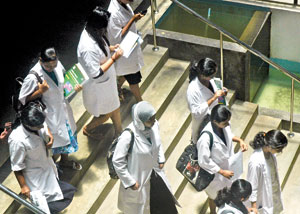
The country’s sole private medical college, the South Asian Institute of Technology and Medicine, was set up two years ago and is already generating heated controversy. On August 31, the Minister of Higher Education, S. B. Dissanayake, issued a gazette giving recognition to the private medical college in Malabe as a legitimate degree-awarding institute. It is entitled to award the degree of Bachelor of Medicine and the Bachelor of Surgery (MBBS).
The Sri Lanka Medical Council, which oversees all aspects of government medical practice, is not happy about the Higher Education Minister’s decision. Sri Lanka Medical Council registrar Dr. N. J. Nonis told the Sunday Times that the Ministry of Higher Education had not consulted the Medical Council or the Ministry of Health before giving the institute degree-awarding status. “Under the Medical Ordinance, the Sri Lanka Medical Council should ascertain whether the institute is up to standard and in a position to award medical degrees. During our last visits, we voiced certain concerns. These concerns should have been addressed before the next step was taken,” he said. Dr. Nonis said the South Asian Institute of Technology and Medicine was established two years ago but had still not commenced clinical studies for lack of a hospital of its own. “The institute has asked private hospitals to give their undergrads opportunities for clinical training. Patients who come to private hospitals expect special care,” he said. Once the Medical Council is satisfied with the standards at the institute, it will submit a report to the Ministry of Health. GMOA spokesman Dr. Upul Gunasekare said the association was not challenging the right for private medical colleges to operate; what it wanted was that standards be met and maintained. “The country is suffering from a serious shortage of medical professionals. But this does not mean we can endorse sub-standard medical teaching institutes. We cannot put patients at risk,” he said. The Medical Faculties Action Committee, comprising government medical students, claims that private colleges would take their toll on state-run medical teaching institutions. “Medical students in the Rajarata and Eastern Provinces are seriously handicapped by a lack of resources. There’s a real danger that our best teachers will be enticed away by these private medical colleges with attractive salaries,” said Action Committee president Nilan Fernando. According to Higher Education Minister S. B. Dissanayake, the University Grants Commission had made several visits to the South Asian Institute of Technology and Medicine and laid down conditions before approving the institute as a degree awarding institute, under the Universities Act. Minister Dissanayake recalled how the late J. R. Jayewardene, as President and Higher Education Minister, issued a similar gazette when the North-Colombo Medical College (Ragama medical faculty) was set up. It became a degree-awarding institute even before the North-Colombo (Ragama) Teaching Hospital.
“The gazette says that clinical training should be conducted by the faculty in its own hospital or in agreement with other teaching hospitals, with the setting up of professorial units and adequate human resources. “Financial capability was given special consideration and a loan has been obtained from a state bank for both the infrastructure facilities and the hospital, which costs around Rs. 2.8 billion,” he said. The minister said a student from a rural area could enter the medical faculty with three simple passes at the Advanced Level, while Colombo and Kandy students have not been able to get places in a medical faculty with three A’s or two ‘A’s and a ‘B’. “Parents are sending their children to countries like India, Bangladesh, Nepal, and even Russia and China to study medicine. There are some 100,000 students in international schools sitting for the London A/Ls,” he said.
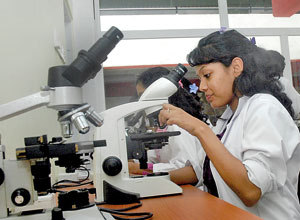
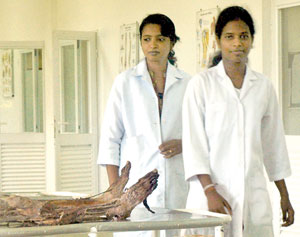
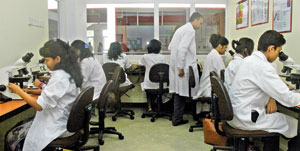
Dr. Ravindra Ruberu. Secretary to the Minister of Health, told the Sunday Times that once the five-member committee is appointed, it will look at issues raised by the GMOA and the Medical Council. “We have asked the institute to keep the latest intake on hold until the committee looks into certain issues and gets them sorted out.” Meanwhile, Professor Neville Fernando, director of the South Asian Institute of Technology and Medicine, has extended an open invitation to the Minister of Health, the Sri Lanka Medical Council and other institutions and organisations to visit the teaching hospital and conduct inspections. “There are some 250 students, and we are into our fifth intake. The fee is Rs. 6 million for the five-year course. We arrange for loan facilities and give scholarships to top scorers in the placement test. It would be much more expensive for a student to go to another country for a medical education.” Prof. Fernando said the South Asian Institute of Technology and Medicine was building a private hospital with 1,200 beds. The hospital is being built with a state bank loan, and will be completed in 2012. “Clinical training will begin in a few months. We have had discussions with a few private hospitals on the matter of clinical studies. We have complete laboratories and departments dedicated to anatomy, microbiology, biochemistry, parasitology, pathology and physiology, museums, tutorial rooms and lecture theatres, research units and auditoriums,” he said. Since 2009, London A/L students following the London Edexcel or Cambridge curriculum in Sri Lanka could complete their university education here without going abroad. The medical degree is offered by the World Health Organisation-endorsed Nizhny Novgorod State Medical Academy, of the Russian Federation.
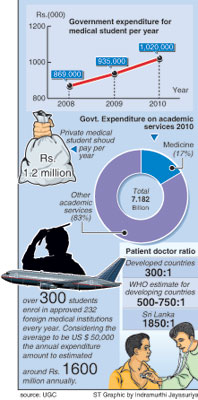
“If government doctors can engage in private practice, why can’t state institution academics on sabbatical leave and others teach our students while still working for state-sector faculties?” he questioned. Dr. Terrance de Silva is president of the parents’ union of the South Asian Institute of Technology and Medicine, and a former deputy director-general of the Ministry of Health. He said many of the parents were well-known consultants and specialists in government hospitals. “Every year, more than 300 students enroll in some of the 232 Sri Lanka Medical Council listed medical institutions to study medicine. Fees at these medical schools range from US$25,000 to US$250,000. If you calculate at an average US$50,000, the country is losing annually US$15 million a year,” he said. The concept of private medical schools may be new to Sri Lanka, but it is not so in other countries. “The first private medical college in India was set up in 1953. Except for the Maldives, Sri Lanka is the only SAARC country without a private medical school,” he said. STUDENTS HAPPY WITH SET-UP
Thimal Sumanasekare, 20, said, “My sister missed a place in the state medical faculty by a few points. She went to Bangladesh to study medicine, but encountered many difficulties there. So my parents decided to send me to this medical college. I see this institute as a blessing to Sri Lankans.” Nilukshi Gumawardene, who is in her first semester, likes the mix of local and foreign students. Kaul Tillakeratne, 20, said, “I’m half-Japanese, half-Sri Lankan. The laboratory and research facilities are like those in foreign medical colleges. My brother went to Singapore for higher studies, while I chose to study here.” |
Saturday, September 10, 2011
Undergrads launch protests against Malabe PMC
September 9, 2011, 8:53 pm
by Dasun Edirisinghe
Undergraduates launched a protest campaign against the University Grants Commission approval for the Private Medical College (PMC) in Malabe to award MBBS degrees.
Convener of the Inter University Students Federation (IUSF) Sanjeewa Bandara told The Island that they had staged protests opposite the Peradeniya and Ruhuna universities on Thursday.
He said that they would hold protests opposite the Kelaniya, Rajarata, Visual and Performing Arts and Buddhist and Pali Universities next week.
"This government and the previous governments are in a process of privatising the free education system of the country," Bandara said adding that they would always oppose the move.
The government, he said, had started a process of privatising education by allowing private medical colleges to be set up in the country.
While the medical faculties of the government universities were struggling due to lack of resources, the government was promoting private medical colleges, Bandara said.
"When the then UNP government set up a private medical college in Ragama in the early 1980s, our comrades successfully opposed it and they had to affiliate it to the Kelaniya University," he said.
Bandara said that the protests opposite all universities in the country would be only the first stage of a much bigger campaign.
At the second stage they would bring undergraduates from all universities to Colombo, he said.
According to him, they would plan their future course of action with other student unions including the Medical Faculty Students Action Committee.
Addressing a media briefing at the UGC, Higher Education Minister S. B. Dissanayake said on Tuesday the government would develop the national universities and permitting the establishment of private universities was a government policy decision.
Friday, September 9, 2011
Education for Employment
September 8, 2011, 12:00 pm
Education is, ultimately, the process of acquiring the knowledge and the skills that are required for us to survive as a species. But we humans are too advanced and sophisticated to be satisfied with an education that is just adequate to meet this elementary need. Every human society, except for a few forest dwelling tribes, has an infinity of needs in addition to the very basics of life such as food, clothing, and shelter: accessories for physical comfort, health, entertainment, leisure, travel, schooling for children, and so on. The fulfilment of these needs calls for a workforce with the necessary knowledge and skills to provide the goods and services required. In modern times, an efficient workforce must be equipped with not only basic knowledge and practical skills, but a whole host of other resources such as managerial capacity, organizational finesse, familiarity with information technology, and professional values. It’s a major aim of education to enable the young to acquire these abilities, which qualify them for gainful employment.
 Educational reforms introduced since the early 1970’s at least have all taken notice of the general criticism that our education system is not adequately employment oriented. Various curricular improvements have been introduced to address this problem under successive governments, though the problem hasn’t gone away completely. It may be that a government alone cannot solve the problem. The collaboration of the business and industrial sector, and the society at large is vital in this connection. It is heartening to see that there is evidence to show that things are changing in a meaningful way at last. The news item in The Island (07-09-2011) under the headline "A’Level students rush to grab jobs in BPO sector" is about a new encouraging development. It says that the Business Process Outsourcing (BPO) sector is one of the many sectors that have been growing fast over the past few years, and that it creates job opportunities for professionals in an international setting. The great attraction that the BPO sector has for A Level students represents a new trend: many students prefer professional training and employment to a university education with doubtful employment prospects. The Lanka BPO Academy is an institution set up to train personnel for this sector. The popular Island columnist Yasas Abeywickrama (THE CATALYST/Monday) is associated with this academy. The contribution of young professionals like him is invaluable for the promotion of the education for employment concept among the youth.
But let me start with a sweeping look back at the past. The generation born around the time of independence are now in their sixties. Due to the political and economic reforms introduced after independence in the interest of the common masses, they were able to grow up in somewhat better circumstances than their parents had had any chance to (in terms of education, health, employment, standard of living, etc for instance). The present day young are the children of this post-independence generation. The younger generation have had the opportunity to grow up in a generally more egalitarian, independent, and materially less insecure atmosphere than their elders, even though amidst occasional political instability, corruption, and other setbacks exacerbated by internal and external vested interests, all of which appear to be inevitable concomitants of ‘democracy’.
Times have changed, changed utterly. For the masses, that is. The changes have been mostly for the better, and are most conspicuous in the political, economic, social, and cultural spheres. These are naturally more evident to the older generation than to the younger, who might tend to take the status quo for granted: we have, hopefully, put behind us almost a lifetime of mainly destructive ‘struggles’ and are embarking on an age of goodwill and cooperation between sections of the body politic determined to move towards a common destiny as a young nation. Liberalised economic policies, despite certain limitations, have largely benefited the people. Social stratification is less severe; class, caste, rank divisions have begun to count for little. Culturally, our people are adopting more accommodative and adaptive attitudes than before.
Though positive changes have taken place in the educational domain as elsewhere since independence, such as free education for all the children of the country, the change of the medium of education from English to the mother tongue which benefited children from the Sinhala and Tamil speaking homes, the narrowly utilitarian literary character of general education inherited from colonial times hasn’t changed to the extent it should. In other words, changes in education have not kept pace with changes in other fields; education has remained largely irrelevant to the actual needs of the country.
The idea that education should involve preparing the students for a life of work as much as training them for a life of the mind is not new. In fact, all the various educational reforms introduced so far have drawn attention to the real problem of a lack of balance in our education system between book-learning and practical skills acquisition. Yet the bookish bias in education still remains. One reason for this is that work that demands manual exertion is considered inferior to work that requires mental effort. Practical skills mastery is looked down upon as suitable only for the ‘mentally less endowed’ in terms of traditional intelligence (IQ) testing which usually focuses on a general linguistic and mathematical ability. In the society at large the same attitude prevails. Other economically productive jobs such as agriculture, carpentry, various types of crafts, etc are reserved for the academically less promising. (However, this manual-mental distinction is more evidently unsupportable today.) Though there is a great demand for skilled professionals in these fields, there are a large number of educated youth who won’t fancy a career in any of them, and therefore are not interested in acquiring those skills. This is unfortunate. The bias against ‘manual labour’ is wrong, for whatever work people do also invariably involves knowledge and mental effort appropriate to it; this fact is more conspicuous in today’s knowledge world than before.
The downgrading of jobs in the most vital fields such as agriculture, building construction, manufacture of utility goods, food technology, handicrafts, woodwork, (to name just a few out of hundreds of possible examples) is a problem that must be addressed in the interest of the country’s economic wellbeing among other things. The main point is that it is partly a matter of misconceiving what is meant by ‘dignity of work’. Many of our people cannot get rid of traditional class-bound ways of thinking according to which certain jobs are considered to be of a higher rank than others. In education, this faulty attitude is reflected as a bias in favour of ‘academic’ subjects such as science, mathematics, and languages as opposed to technical subjects such as carpentry, plumbing, and dressmaking.
To promote vocational education among the secondary students in schools such harmful misconceptions need to be eliminated. The way to do this is to convince them of the fact that all forms of work are of equal dignity. What matters is not the public recognition that a person gets for belonging to a particular profession but the meaning it has for the worker and the society at large. Let’s teach our young to see work as an opportunity in the same way as the great American inventor, scientist, and businessman Thomas Alva Edison (1847-1931) did (and he warned others lest they miss it): "Opportunity is missed by most people because it is dressed in overalls and looks like work". Edison is also remembered for having said "Genius is 1% inspiration, 99% perspiration".
When education is not employment oriented, many educated young people are left without jobs even where jobs are found aplenty, but where persons with the necessary skills to take them up are few. This kind of structural unemployment accounts for a substantial part of the problem of joblessness in Sri Lanka. In this context, the importance of vocational education at the secondary school level need hardly be stressed. Secondary school graduates should be given a basic mastery of technical skills including computer knowledge that enables them to find gainful employment, if they so choose, instead of going to university, but still qualify themselves further academically while working. It is encouraging to see that a trend is now emerging where many young school leavers seem to think it wiser to enrol for vocational courses or find direct employment if possible and pursue higher studies autonomously. This is no drawback for students particularly in some fields such as business, banking, agriculture, motor mechanism, etc. Actually, a work environment is very helpful for focusing the mind. Work and study: each becomes a way to relax for employed students when the other tires them out.
The availability of such an option can be very attractive to many students and parents. It will naturally ease the pressure on the existing university system. It is true that university graduates, if successful in finding a job commensurate with their qualifications, do better than non-university graduates. But, in the case of many Sri Lankan graduate employees their education is often irrelevant to the work they are actually required to do.
Close cooperation between the education and industrial sectors is a vital economic factor for any country, for the most important asset it has is its youth. A country’s education sector is responsible for equipping the young people with the knowledge and skills that industrialists and business people demand.
Thursday, September 8, 2011
Parents of medical students call for legal recognition
| The parents of medical students at the Private Medical Institution, Asian Institute of Technology and Medicine (SAITM) yesterday called on the authorities to give legal recognition to the institution. The former Deputy Director General of Health Services Dr. Terrance De Silva addressing a media conference with other aggrieved parents said that the private medical institution should be accepted and monitored by the authorities to ensure its functioning. “These institutions should fall in line with government requirements,” he said. Dr. De Silva said the MBBS degree awarded by the institution is affiliated to a world recognized Russian State University. He questioned as to why the Sri Lanka Medical Council (SLMC) which recognizes 332 medical schools in 44 countries chose not to give recognition to the medical institution. “The SLMC recognizes universities in Nigeria, Ethiopia, Papua New Guinea and Afghanistan where standards are very low. Why cannot they recognize institutions that are set up in the country?” he questioned. He explained that the institution’s course fees are an estimated Rs. 5.5 million . “Outside the country course fees for such a course vary from Rs.2.5 million to 30 million . The fees for this particular course falls somewhere in-between,” he said. Earlier there was 16% VAT which accounted for an estimated Rs.9 lakhs but said this has now been reduced to 2%, he said. He said parents preferred to educate their children in Sri Lanka instead of sending them abroad for studies and that a large number of students in the country don’t qualify for medical college admittance in Sri Lanka due to lack of vacancies further limiting their chances of studying medicine. “This is an injustice to the children,” he said. | |
Docs call off strike after talks with Sirisena
September 7, 2011, 10:46 pmBy Dilanthi Jayamanne
Following discussions with Health Minister Maithripala Sirisena the Government Medical Officers’ Association called off their strike scheduled for yesterday morning.
GMOA President Dr. Anuruddha Padeniya, addressing a press conference yesterday, said that the Minister had agreed that the gazette was without value.
The Minister, he said, had agreed to appoint a five-member committee to review the gazette and identify the necessary requirements. The committee is to give its reports in two months time. The Ministry had also agreed to appeal to the Institution to refrain from enrolling students till the committee submitted its report.
Minister Sirisena agreed to take up the Prescribed Standards Bill in Parliament which had been withheld for various reasons.
Padeniya said that the Chairman of the Sri Lanka Medical Council, Prof. Lalitha Mendis, who had also been present at the meeting, had said that the SLMC had not reviewed the Malabe Medical College as it did not have a teaching hospital. The gazette too identifies the requirements of the Malabe PMC, he added.
Although the Minister of Higher Education stresses that he has given authorization to the Malabe PMC under section 25 of the University Act, Section 70 of the same Act states that the SMLC is the competent authority on giving authorization to institutions to award the MBBS degree, Dr. Padeniya added.
Wednesday, September 7, 2011
|
 The Government Medical Officers' Association (GMOA) gave
SB defends giving MPMC degree awarding status
September 6, 2011, 9:10 pmby Dasun Edirisinghe
Despite doctors threatening to strike on Wednesday (07) in protest against the granting of degree awarding status to the Malabe Private Medical College, the Higher Education Ministry yesterday reiterated its commitment to allow private universities operate in the country.
Higher Education Minister S. B. Dissanayake told a media briefing at the University Grants Commission (UGC) yesterday that the Malabe Private Medical College (South Asian Institute of Technology and Medicine - SAITM) had been seeking the degree awarding status since 2008, though the UGC gave approval after monitoring it for 2 years and 11 months.
"The SAITM had sent their application seeking approval to award degrees on September 30, 2008," he said adding that before they granted approval, the UGC team, including senior professors, consultant doctors and members from the Sri Lanka Medical Council (SLMC) inspected the institute and their programmes.
The minister said that the SAITM fulfilled the UGC’s guidelines and standards before being the degree awarding status was approved.
Dissanayake said that government’s policy was to allow private universities here, but not the way former President J. R. Jayewardena approved some private medical institutions in 1981.
He charged that although the Government Medical Officers Association (GMOA) was protesting against the SAITM, the sons and daughters of most of doctors were going overseas for higher education every year.
"We ask the GMOA to not to put innocent patients in trouble by launching trade union action," Dissanayake said.
GMOA refuses to accept private medical uni


 In the midst of protests by the Government Medical Officers Association (GMOA) which had refused to accept the legality of the private medical university in Malabe, the Higher Education Minister today vowed that the university will continue to function and that many more private universitiesof the kind will be established in Sri Lanka in the future.
Minister S. B. Dissanayake said the Asian Institute of Technology and Medicine (SAITM), the first private medical university in Sri Lanka which was established in 2008, is a legally functioning, accredited institution although the GMOA has said that it should not have legal recognition on the basis that the medical college was functioning as a branch of a Russian university and therefore could be legally established in the country.
The Government Medical Officers’ Association (GMOA) has vowed to continue with a strike tomorrow. “We will definitely stage an all-island strike tomorrow in protest against the authority’s decision to legalise the medical institution,” a GMOA sources said today. The GMOA has also decided to withdraw its membership from the SLMC, if the institution is accepted as legal entity. (Olindhi Jayasundere)
Subscribe to:
Posts (Atom)