Friday, October 28, 2011

GMOA to work out its own protocol for doctors

The Government Medical Officers Association (GMOA) said yesterday it would compile its own report on the controversial private medical college in Malabe and would introduce a protocol on the minimum standards required to practice medicine in Sri Lanka.GMOA spokesman Dr. Upul Gunasekara said the protocol would be based on guidelines established by the World Health Organisation and Indian medical standards. He said the GMOA report would be out before the Health Ministry’s five member committee report which was due next month.

GMOA Assistant Secretary Dr. Sankalpa Marasinghe said the South Asian Institute of Technology and Medicine (SAITM) had not adhered to the conditions in the gazette notification issued in August this year and that the gazette notification did not directly stipulate the exact time duration by which some of the conditions needed to be fulfilled.

He said one month after the gazette notice was issued SAITM was expected to submit information on the recruitment of appropriate academic and administrative staff, information on the corporate plan for the next five years as well as the deed of trust relating to the establishment of SAITM.

“We have reason to believe that none of these requirements have been fulfilled by the institution,” Dr. Marasinghe said.

Dr. Gunesekara said several parents had made complaints to the GMOA and that all doctors who had enrolled their children at SAITM had taken them out of the private institution.

Dr. Marasinghe alleged that the institution was not affiliated to the Russian Nizhny Novgorod State Medical Academy and that two institutions instead have shared an agreement and alleged that based on the agreement students will be transferred to Russia through a student exchange programme. He said that the parents have not received receipts for the payments made to the institution.“We tried contacting the Russian university over the phone, by email and every other way possible but that have not been reachable,” he said and added that the Education Ministry, Higher Education Ministry, Justice Ministry, Defence Ministry and Finance Ministry should investigate the matter. (By Olindhi Jayasundere)
Published online 20 October 2011 | Nature | doi:10.1038/news.2011.607
News: Explainer

Different method, same result: global warming is real

Independent analysis confirms earlier results but aims for greater transparency.
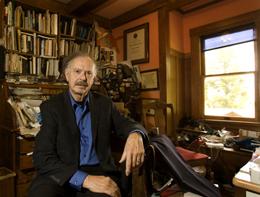
Richard MullerRichard Muller led the Berkeley Earth Surface Temperature Group's review of global climate data.Dan Tuffs/Getty Images
After generating considerable attention with a preview on Capitol Hill last spring, an independent team of scientists has formally released their analysis of the land surface temperature record. Led by Richard Muller, a physicist at the University of California, Berkeley, the Berkeley Earth Surface Temperature study takes a different and more comprehensive approach than earlier assessments, but reaches the same basic conclusion: global warming is happening. Nature examines how the new study differs from its predecessors.
What is the Berkeley Earth Surface Temperature study?
Until now, instrumental temperature records dating back to the middle of the nineteenth century have been compiled by three main research groups: NASA's Goddard Institute for Space Studies in Greenbelt, Maryland; the US National Oceanic and Atmospheric Administration in Washington DC; and a collaboration between Britain's Met Office and the Climatic Research Unit at the University of East Anglia in Norwich, UK. All three records were developed in different ways, using separate, but overlapping, sets of data. By and large, all three studies line up fairly well as they document rising temperatures, particularly the sharp spike in recent decades, but that hasn't halted criticism from climate sceptics regarding the quality of the data and the rigor of the analysis.
What was the research team's goal, and did they achieve it?
Muller says he listened to the sceptics and decided that an independent analysis was in order. He and his team decided to tackle the temperature record independently, on the basis of first principles. They say their results line up with previously published studies and suggest that the average global land temperature has risen by roughly 0.9 °C since the 1950s.
Muller says he is surprised at how well the findings line up with previous analyses, which he takes as evidence that the various scientific teams working on these data did indeed go about their work "in a truly unbiased manner".
What did the team do differently?
The Berkeley researchers developed their own statistical methods so that they could use data from virtually all of the temperature stations on land — some 39,000 in all — whereas the other research groups relied on subsets of data from several thousand sites to build their records. This meant that they also had to figure out ways to handle shorter temperature records from instruments or stations where the record was interrupted.
Muller and his team also used a different approach to analysing the data. Scientists working on the earlier studies adjusted raw data to account for differences in the time of day when readings were made, for example, or for higher temperatures caused by the urban heat island effect, in which cities tend to be warmer than natural landscapes. Muller says his team included the raw data in its analysis and then applied standard statistical techniques to remove outliers.
Is there an advantage to tackling the problem this way?
The team claims that this method is more transparent than those used by the other groups. And it may be true that this kind of analysis could make it easier for outside groups to reproduce and analyse the study.
Has the study been peer-reviewed?
Not yet, which is a common criticism among many scientists who were already convinced that the earlier analyses were solid. The Berkeley team is preparing to submit four papers to the Journal of Geophysical Research for peer review. One paper describes the method and how it was applied to the larger temperature record. Another discusses the various methods for dealing with known problems and biases in the temperature record. A third focuses on the urban heat island effect and a fourth looks specifically at temperature stations that have been labelled as problematic by sceptics.

Is the latest study likely to win over any sceptics?
It's too early to tell what kind of effect the report will have, but there are already signs of scepticism among the sceptics. Nonetheless, Steve McIntyre, who runs the sceptic blog Climate Audit, said in an interview that the team deserves credit for going back to the primary data and doing the work. Although he hasn't gone through the papers in detail, he is already questioning the results reported by the Berkeley team regarding the questionable research stations and the urban heat island effect. McIntyre, a statistician, says he has already run a preliminary analysis and was unable to reproduce the results reported by Muller and his crew.
What comes next?
Now we wait to see how the peer-review process plays out. Meanwhile, the Berkeley team will post a complete file of the temperature record on its website by the end of this week. "Previously, the data were spread over 15 different databases with almost as many different formats, and a great deal of overlap," Muller says. "I would like to think that we are opening this field up to a much larger community by reducing the barrier to entry."

Students leaving Malabe PMC – GMOA

It’s only a false rumour - Dr. Fernando


By Don Asoka Wijewardena

The Government Medical Officers’ Association (GMOA) yesterday accused the South Asian Institute of Technology and Management (SAITM) of cheating a large number of students and their parents.

GMOA Assistant Secretary Dr. Upul Gunasekera said some parents had sought the GMOA’s help to get refunds and the GMOA in turn had requested the Ministries of Health, Defence, Justice and Finance to help the disgruntled parents get their refunds.

Speaking to the media, at the GMOA head office yesterday, Dr. Gunasekera said that the gazette notification 1721/19 of 30. 8. 211 was questionable. Although a month had elapsed, the requirements stipulated had not been fulfilled. It was not clear whether the degree awarding status was provisional or permanent.

Dr. Gunasekera said though the Malabe medical school did not have clinical training facilities, it had announced that it had access to two private hospitals for clinical training. The SAITM management had not even informed the parents of the students where clinical training would be done.

It was the right of every patient, admitted either to a private hospital or State-run hospital, to be aware whether they were subject to examination by medical students and their informed consent should be obtained for that purpose, Dr. Gunasekera said claiming that no receipts had been issued to parents who had made payments to the Malabe private medical college.

GMOA Assistant Secretary Dr. Sankalpa Marasinghe said that it had been revealed in newspapers that some students who had enrolled at the Malabe medical school had not passed the GCE A/L. The GMOA would be compelled to request the UGC and all other relevant authorities to inquire into that matter urgently, he said.

Contacted for comment, Malabe Private Medical School Director Dr. Neville Fernando dismissed all allegations levelled by the GMOA as baseless. No parent had sought to withdraw students, he insisted. Parents were not supposed to pay direct to the school. They were advised to pay the school through a bank. Once parents made payments the Banks would issue them with receipts, he said.

Dr. Fernanado added that he had invited all GMOA office bearers to have a discussion on the issue, but there had been no positive response. It was not compulsory for any medical student to go to Russia to complete his or her final examination. Any student after successful completion of four years would be able to sit the final examination. The Malabe medical school would issue a recognized MBBS degree, Dr. Fernando said.

Several rival organisations had, Dr. Fernando said, launched a mud-slinging campaigns against the Malabe medical school. His medical school conducted its affairs in a very transparent manner, he said inviting the GMOA and other critics to have a dialogue without spreading false rumours.

‘UGC delaying our payments’– FUTA

There were far more pressing problems – UGC Chairman


by Dasun Edirisinghe

University teachers are likely to go on the warpath again after two months of silence on their salaries issue. The government’s delay ito increase the allowances for internal examinations, visiting lecturers, administrative work and postgraduate supervision has irked the teachers.

President of the Federation of University Teachers Associations (FUTA) Dr. Nirmal Ranjith Devasiri blamed the University Grants Commission (UGC) for the delay.

"Our demand is to have these allowances increased five fold as they had not been increased for a last 20 years," he said.

Dr. Devasiri said that the committee, appointed by the Higher Education Ministry, comprising representatives from the UGC, FUTA and the ministry also recommended that the allowances be increased.

But, the UGC was still delaying it, he said.

"At a recent meeting, the Treasury too agreed to increase those allowances, but UGC wants to appoint another committee to increase it," the FUTA Chairman said.

Citing some examples, Dr. Devasiris said that the visiting lecturer allowance was still Rs. 500 per lecture. If some teacher went to Anuradhapura for a lecture how could he/she afford the other costs? He asked

University teachers launched their trade union action by withdrawing from the volunteer posts they held three months ago and they suspended it following a ministry assurance to solve it immediately.

Dr. Devasiri warned that if the government did not take immediate action they could revive it at any time.

Contacted for comment, Chairman of the UGC Prof Gamini Samaranayake said that the issue at hand was not worthy of comment.

He added that there are many other issues in universities to be reported in newspapers rather than the salary and allowances issues of the teachers.

Thursday, October 27, 2011

School phobia and school refusal


article_image
Dr. B. J. C. Perera MBBS(Ceylon), DCH(Ceylon), DCH(England), MD(Paediatrics), FRCP(Edinburgh), FRCP(London), FRCPCH(United Kingdom), FSLCPaed, FCCP, FCGP(Sri Lanka) Consultant Paediatrician


KEY POINTS

* School phobia or school refusal is different from truancy.

 * It is associated with considerable anxiety regarding schooling.

* There are many causes for school refusal.

* The reasons may be based in the school itself or at home.

* School refusal needs to be handled promptly but gently.

* School authorities need to be informed of the problem

* Professional help may be necessary in some cases.

School refusal is a term originally used in the United Kingdom to describe refusal to attend school as a consequence of emotional distress. School refusal differs from truancy in that children with school refusal feel anxiety or fear towards school whereas truant children generally have no feelings of fear towards school. Instead, truant children often feel angry and bored with school. The term school refusal was coined as a more general alternative to school phobia, which can be used to describe school refusal caused by separation anxiety as well. School phobias, known to professionals as school refusal is an extreme and complex form of anxiety about going to school but not the school itself as the name suggests. School phobia, school avoidance and school refusal are terms that describe an anxiety disorder in children who have an irrational and persistent fear of going to school. Their behaviour is different from children who are truant and express no apprehension about missing school. Children who have school avoidance want to be in close contact with their parent or caregiver whereas truants do not. School phobic children are often insecure, sensitive and do not know how to cope with their emotions. They appear anxious and may become physically ill at the thought of attending school.
Many children at some time in their school career are challenged by anxiety and fear about attending school. It has been estimated that approximately 1 to 5 per cent of school-aged children have had some form of school refusal. The rate is similar within both genders and there are no known socioeconomic differences. It is most common in the age group of 5 to 11 which is perhaps the most vulnerable age in view of their immaturity.

Children and adolescents with school refusal sometimes suffer from other problems such as mood disorders or clinical depression. The longer a child stays out of school the harder it is for them to go back and some believe that it is best to try to get the child back into school as quickly as possible. However, it may be hard to accomplish this as when forced, they are prone to temper tantrums, crying spells, psychosomatic or panic symptoms and threats of self-harm. These problems quickly fade if the child is allowed to stay at home.

Whereas some cases of school refusal can be resolved by gradual re-introduction to the school environment, some others may need to be treated with some form of psychodynamic or cognitive-behaviour therapy. Some families have sought alternative education for school refusers which has also proved to be effective. In extreme cases, some form of medication is sometimes prescribed but none of these have stood out prominently as solutions to the problem. A medical condition often mistaken for school refusal is delayed sleep phase syndrome (DSPS). That condition is a circadian rhythm sleep disorder which causes difficulty falling asleep at night and problems with waking up in the morning.

Going to school for the first time is a period of great anxiety for very young children. Many will be separated from their parents for the first time, or will be separated all day for the first time. This sudden change can make them anxious and they may suffer from separation anxiety. They are also probably unused to having the entire day organized for them and may be very tired by the end of the day. This leads to further stress and makes them feel very vulnerable. For older children who are not new to the school, who have had a long holiday break or have had time off because of illness, returning to school can be quite traumatic. They may no longer feel at home there. Their friendships might have changed. Their teacher and classroom might have changed. They may have got used to being at home and closely looked after by a parent. They feel insecure when all this attention is removed and suddenly they are under the scrutiny of their teachers again. Other children may have felt unwell on the school bus or in school and associate these places with further illness and symptoms of panic. They would want to avoid school in order to evade panicky symptoms and panic attacks fearing, for example, vomiting, fainting or having diarrhoea.

Factors that can cause reluctance to attend school can be divided into several categories. These categories have been developed based on studies in the United States. Some children may be affected by several factors at once. It may be possible that the child wants to avoid school-related issues and situations that cause unpleasant feelings in him, such as anxiety, depression or psychosomatic symptoms. The reluctance to attend school is one symptom that may sometimes indicate the presence of a larger issue, such as anxiety disorder, depression, sleep disorder, separation anxiety or panic disorder. It may also be that the child wants to avoid tests, presentations, group work, specific lessons or interaction with other children. The child in question may also want attention from outside the school from significant people such as parents or older acquaintances. It may also be that the child wants to do something more enjoyable outside of school such as practicing hobbies, playing computer games, watching movies, riding with friends or learning auto-didactically.

Possible triggers for school phobia include being bullied, starting school for the first time, moving to a new area and having to start at a new school, being off school for a long time through illness or because of a holiday, bereavement of a person or a pet, feeling threatened by the arrival of a new baby, having a traumatic experience such as being abused, problems at home such as a member of the family being very ill, marital rows, separation and divorce, violence in the home or any kind of abuse, not having good friends or any friends at all, being unpopular, being chosen last for teams and feeling a physical failure in game and feelings of academic failure.

When a child does not want to go to school, it is often assumed by school professionals that the reason lies at home. Perhaps the child is afraid to leave home out of an unrealistic belief he or she must stay behind to mind the boutique or to guard against some danger. The hypothesis is that the child feels unbearably anxious unless he or she stays home where the parents’ well-being may be confirmed. The child’s parents, on the other hand, may search for something in school that has intimidated their child. A school psychologist understands that school avoidance is probably the result of many factors and the child may be reacting to both home and school stressors.

Current thinking about school phobia suggests there are some children who refuse to attend school because of separation anxiety. These are mostly younger children who are less accustomed to being away from home. However, some may be trying to avoid uncomfortable feelings associated with school. They tend to be sensitive, overactive boys and girls who do not know how to deal with their emotions. They may fear being criticized or evaluated. A few are truly frightened by a particular activity such as riding the school bus or attending an assembly.  Many of these children do attend school but with great discomfort. They tend to be highly anxious and lack the skills needed to handle social interactions. Perhaps they have had negative experiences in the past and are afraid something else will happen. Research indicates many children experience school events as stressful enough to produce such symptoms as withdrawal, aggression, moodiness or anxiety. Studies indicate many of these events to involve disciplinary methods which are punitive in nature and attack the child’s self esteem. A child’s behaviour may even resemble symptoms of post-traumatic stress disorder. In that condition, memories of a traumatic event continue to interfere with daily functioning, long after the actual event had taken place.

While severe stress responses may be unusual, any child who does not want to go to school is experiencing stress, and an important part of solving the problem is for the adults involved to assess what may have gone wrong. When a child seeks to avoid school, the parents are advised to quickly request consultation with both the classroom teacher and perhaps the school psychologist. If this is done, parents, teacher and psychologist may explore clues from both home and school to determine how the child’s needs are not being met. While most children are adaptive and resourceful and able to adjust to a certain amount of challenge, there are limits to adaptation. Children whose skills are weak in areas needed for school success may encounter demands beyond their abilities. Sensitive children who are highly in tune with others may encounter an experience which overloads their finely-tuned empathies. Whatever the cause, the parents need to see themselves as part of a professional team working to solve the problem.

But first of all, parents must bring the child to school. They will probably be strongly ambivalent about subjecting the child to what seems like a situation of unbearable stress. Children with anxieties about going to school may suffer a panic attack if forced which then makes them fear having another panic attack and there is an increasing spiral of worry with which parents often do not know how to deal. However, by working with the school authorities to find ways to modify school and home environments for the child’s benefit, some of the discomfort will be resolved. Sometimes simple interventions, such as a planned focus on the child’s positive behaviours or special time with an important person in the child’s life, may help the child to comfortably resume going to school. At school, short-term counselling, opportunities to engage in favourite activities or a chance to earn a privilege could be options. If necessary, the psychologist could also help find a therapist to work with both the child and the family.

The experience of joining with school personnel to successfully reintegrate a phobic child into the school will allow parents to learn what works and what doesn’t for their boy or girl. They will have an ally in the school psychologist, who will act as a liaison among the various people involved. If the child has other difficulties beyond school refusal, they will be addressed. Intervention will give the child a chance to benefit from the educational environment and to master academic tasks in a supportive and encouraging setting where the child may thrive.

Some children have a particular susceptibility to develop school phobia as a result of a medical condition. These disorders in clued Asperger Syndrome and Attention Deficit Hyperactivity Syndrome. They need to be dealt with differently to children without these. In fact relaxation techniques in these syndromes can make them more anxious.

The longer school phobia goes on, the harder it is to treat and early initiation of appropriate action is necessary. If a child is severely affected, it is better to ask for a referral to a professional as early as possible. Things a parent could do include getting help from your child’s school. Teachers need to be aware that there is a problem. It should be made quite clear to the child’s teachers that he or she is not just "playing up" but that the anxiety is very real and that the child is suffering from it.

At home, life should continue and the child should be encouraged to carry on as normal. But the child might want to stop going out, especially without the parents, even to parties that he or she was quite happy being left at before. Although parents need to deal sensitively with such children. It is also helpful to reassure the child and tell heim or her that the child would be fine once he or she has got over the part the child dreads. The child needs to be told, albeit ever so gently, that he or she has a private battle to fight every school day and that the child has to be brave enough to go to school under those difficult conditions. The parents n eed to keep to the same routine. They should make the child go to bed and get up at the same time every day, including weekends, so that he or she has some secure framework to live around.

The goal is to have the child return to school and attend class daily. In the best case scenario, the student’s confidence and enjoyment of school will increase when a plan is implemented and changes are made. However, if the school phobia is extreme, a therapist or psychiatrist’s assistance may be necessary.

The writer would appreciate feedback from the readers. Please e-mail him at bjcp@ymail.com

Military accused of attack on Jaffna Uni. students


article_image
by Dasun Edirisinghe

Undergraduates yesterday alleged that the military deployed in Jaffna was responsible for attacking Jaffna university students. One student was still warded with head injuries.

Convener of the Inter University Students Federation (IUSF) Sanjeewa Bandara told The Island that there were 55,000 military personnel deployed in the Jaffna area, but they were not able to prevent attacks on students.

"The Students’ Council of the university protested on Oct. 17 against attacks on undergraduates four days back," he said adding that in return the President of the Students’ Council was attacked on Oct. 25 around 7.30 p.m.

The undergraduate, P. Kaviraj, is still undergoing treatment in Ward No. 28 of the Jaffna teaching hospital, Bandara said.

Criticizing the security forces in the peninsula, he said that the Jaffna police failed to act on their complaint and arrest anyone.

According to him, the military was not allowing even a peaceful demonstration to be conducted in the Jaffna area.

"We will launch a countrywide protest campaign against these attacks from next Monday," Bandara said adding that the government must stop targeting student leaders who shout against its corruptions and malpractices.

When contacted by The Island for comments, military spokesman Brigadier Nihal Hapuarachchi denied that the security forces were involved in the incident.

He said that the students pointed a figure at the security forces, but they did not complain to the police.

"After a proper complaint, if police ask for an investigation the Army could hold it," Hapuarachchi said.

The Minor offences branch of the Jaffna police said that the undergraduate was injured in a clash between those who support ragging and those against it.

A police officer said however, they investigate the complaint made by students and one student surrendered to the police in connection with the attack.

"We produced him in Court," he said.

When The Island contacted the Director of Jaffna hospital to inquire about the condition of warded student, she referred us to Consultant surgeon of the ward, but he was not available for immediate comments.

Duty Medical Officer of the Ward No. 28 refused to comment on the injured undergraduate.

GMOA wants salaries of public servants increased

The Government Medical Officers Association (GMOA) said today the number of skilled professionals in the government sector was fast declining because of the gross discrepancies in salaries between professionals in the public and private sectors.

Speaking on behalf of all government sector employees, the GMOA urged the authorities to increase their salaries, which was long overdue. GMOA Secretary Dr. Sankalpa Marasinghe said according to the salary structure introduced in 2006 government employees were expected to receive salary increments but that had not happened.

“Skilled workers and professionals are grossly underpaid. The lowest salary of a government employee is Rs.12,500 while the highest is Rs.50,000,” Dr. Marasinghe said. He said the salary compression ratio which is one to four, should be increased to one to 12. In the private sector salary ratios should be increased up to 1000.

Dr. Marasinghe said skilled professionals in the government sector are now scarce due to the low salaries. “There are very few chartered accountants or engineers employed in the government sector. However an overwhelming number of doctors are in the government sector,” he said adding that 16,000 doctors are employed in the government sector.

The GMOA today met the Salaries and Cardre Commission and requested for a meeting with the Treasury Secretary and other officials to negotiate salary increments in the 2012 budget. He said discussions would continue in the coming weeks. (Olindhi Jayasundere)

Wednesday, October 26, 2011

C’bo Uni. Management faculty closed following clash


article_image
by Dasun Edirisinghe

The Management Faculty of the Colombo University was shut down yesterday, until further notice, following clashes between two rival student groups.

The faculty premises were declared out of bounds for all students except for the first-year undergraduates, university sources said adding that the decision to close down the faculty was taken following clashes over ragging incidents.

Immediately following the incident security was beefed up in the area with police personnel being deployed, police spokesman SP Ajith Rohana said adding that a police inquiry into the incident was underway.

The Vice-Chancellor of Colombo University, Prof. Kshanika Hirimburegama said that the Management Faculty had been closed for all but first-year students.

She said that the conflict between the two factions in the Management Faculty had prevailed for several years and that a committee had been appointed to look into yesterday’s incident.

Appropriate action would be taken to suspend the students belonging to the two groups involved in the incident, she said.

Several students received minor injuries and sought medical attention from the Colombo National Hospital, university sources said. One of the injured has been warded at the CNH.

Senior Students Counsellor Premakumara de Silva said that all senior students had been ordered to vacate their hostels with immediate effect. The clash was between two student groups for and against ragging. Ragging would be eliminated from the university at any cost and the students found guilty would be punished, he added.


Tuesday, October 25, 2011

Doctors ask for five-fold pay hike


By Emanthi Marambe

The Government Medical Officers’ Association (GMOA) yesterday insisted on a five-fold basic salary increase from this year’s Budget.

Addressing a media briefing at the GMOA head office in Colombo, GMOA President Dr. Anurudda Padeniya said that government doctors expected a salary increase based on the proposals of the National Salary Policy drafted in 2006.

Dr. Padeniya said that a government doctor currently drew a salary of between Rs. 26,000 and Rs.42,000 while a specialist doctor received a basic salary of Rs. 42,000. "If the government is unable to grant a substantial salary increment to doctors, one cannot prevent them from leaving the public sector for the private sector or going abroad," he said.

Five years had lapsed since the introduction of the national salary policy but no salary revision, based on this policy, had been granted to doctors so far, Dr Padeniya said. "We hope that the government would take action to grant our due increments in the forthcoming budget," he said.Representatives of the GMOA had held talks with the government two months ago on the issue of their salary increments and the authorities had agreed to grant their request, he said.

Dr. Padeniya said that a doctor was entitled to a monthly fuel allowance of Rs. 21,000 and that had been approved in 2008 but its implementation had been delayed causing much inconvenience to doctors working in remote areas, including the North and the East.

Dr. Padeniya pointed out that the doctors would no longer be able to work in the public sector hospitals if the government continued to ignore them and delayed their due salary increments. "It is inevitable that the doctors will either move to private practicing or go abroad for better income," he said.

The Budget Proposals are due to be presented to Parliament on Nov 22.

Monday, October 24, 2011

Forum on Corporate environment sustainability

The 16th International Forestry and Environment Symposium organized by the Department of Forestry and Environment Science of the University of Sri Jayewardenepura will be held from October 28-29 2011.
The Department of Forestry and Environment Science, University of Sri Jayewardenepura is organizing a "Forum on Corporate Environment Sustainability" on October 28 from 7 pm at the Golden Rose Conference Center, Boralesgamuwa in line with the 16th Annual International Forestry and Environment Symposium.
The objective of this forum is to educate and create awareness among the private sector on emerging trends in Corporate Environment Sustainability, Head of the Forestry and Environment Prof Hiran Amarasekera said. Contact Jithya Wijesinghe on 0715870146 for further details.