Saturday, December 10, 2011

Catching a yawn 'a family matter'

Man yawning Yawning appears to be contagious, BBC
Contagious yawning may show the closeness of your relationships rather than your tiredness, say scientists.
The act of yawning gets more blood flowing around the brain.
The fact that it is contagious has never been fully explained, but one theory suggests it is linked to empathy between people.
An Italian study in the journal PLoS One found people were more likely to yawn in response to a close relative rather than just a friend.
The finding suggests contagious yawning may have evolved as a way of maintaining alertness within a group.
Some believe even animals such as dogs and chimpanzees have been found to be prone to it, and about half of all humans are thought to have this response.
The supposed link between empathy and contagious yawning was strengthened by earlier studies in which children with autism, who tend to be less capable of empathy than other children, were found to be less likely to do it.

Start Quote

Our results demonstrate that yawn contagion is primarily driven by the emotional closeness between individuals ”
University of Pisa researchers
The University of Pisa researchers observed 109 men and women from a variety of nationalities in their day-to-day activities, and recorded instances of contagious yawning.
They found it was most likely between directly-related family members, slightly less likely between friends, and then less likely still between acquaintances and strangers.
The delay between yawn and response was greater between acquaintances and strangers, again suggesting that empathy and social familiarity played a role.
The researchers wrote: "Our results demonstrate that yawn contagion is primarily driven by the emotional closeness between individuals and not by other variables, such as gender and nationality."
Baboons aping Dr Catriona Morrison, an experimental psychologist from the University of Leeds, said that this primitive subconscious response could shed light on the evolution of the human brain.
She said: "Some have suggested that it developed from the days of cavemen when someone had to be on watch all the time - yawning increases cerebral blood flow so can improve alertness.
"Social behaviour is thought to be a conscious function of the brain, but this is unavailable to consciousness.
"We just don't have any control over it at all."
Dr Atsushi Senju, from Birkbeck College in London, said that a similar effect had been noted in a type of baboon, with contagious yawning more likely between close allies in a troupe.
However, he said: "It is still not certain that empathy is the cause - there are still those who believe that this is simply a natural reflex."

what are the greenest cars?


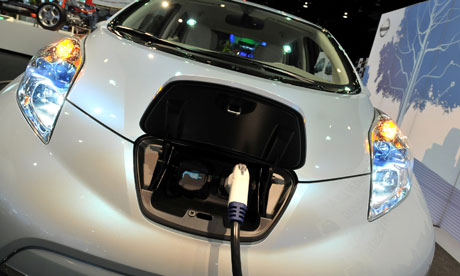
Q&A on green cars : Nissan Leaf prototype electric car
The Nissan Leaf prototype electric car. Photograph: Bryan Mitchell/Getty Images

Petrol

Most vehicles still have conventional petrol or diesel engines. Contrary to what you may read in the media, they won't be dying out any time soon – instead they will become more efficient. Better efficiency means lower emissions. Petrol engines are favoured for smaller city-type cars as they are lighter, more responsive for urban driving and cheaper to manufacture. There are new petrol engines, such as two- and three-cylinder units, coming on to the market that are extremely efficient.
Example: Nissan Micra DIG-S 68.9 mpg, 95g/km CO2

Diesel

Diesel engines are more economical than petrol engines, which means they also have lower CO2 emissions. If you mostly drive long distances, an efficient diesel engine may be your smartest option. The downside is that diesel engines can emit particulates that harm local air quality – moreso than petrol engines. The emissions are reduced if the vehicle has a diesel particulate filter (DPF). However, the technology that makes diesel engines cleaner bumps up the cost.
Example: BMW 520d EfficientDynamics Saloon 62.8 mpg, 119g/km CO2

'Green' petrol and diesel models

Many car manufacturers offer green versions of their conventional models. These are more fuel-efficient and so have lower emissions. This is achieved by improvements such as better aerodynamics, reduced weight, lower-resistance tyres, longer gearing, remapped engine management systems, stop-start systems and less load on the engine from ancillary items. Green models often have a price premium. So you need to work out if your mileage will bring large enough savings on fuel to pay back the extra investment. At least one manufacturer is applying efficient technologies to all its vehicles.
Example: Volkswagen Polo BlueMotion 80.7 mpg, 91g/km CO2

Hybrid Electric Vehicle (HEV)

A hybrid vehicle has a conventional engine and a battery-powered electric motor. The idea is that the engine is used most of the time, but in most hybrids the electric motor alone can provide power at low speeds. In urban use, this means a hybrid should offer reduced fuel consumption and CO2 emissions. At higher speeds, the engine and the electric motor work together to provide more power. Hybrid cars are generally more expensive than comparable non-hybrid ones, because they effectively have two powertrains.
Example: Peugeot 3008 Hybrid4 74.3 mpg, 99g/km CO2

Plug-in Hybrid Electric Vehicle (PHEV)

Plug-in hybrid vehicles will be here soon. These share similar technologies to hybrids plus you can plug these into an electricity supply to recharge the electric motor's battery. That means higher electric power capacity, a longer driving range on the electric motor – possibly more than 20 miles – and therefore lower exhaust emissions.
Example: Toyota Prius Plug-in Hybrid 134 mpg, 49g/km CO2

Electric Vehicle (EV)

We are at the start of an electric revolution. There are currently few electric vehicles on the market, but many manufacturers are entering the market. Electric vehicles do not produce any tailpipe emissions. If they are recharged using electricity from renewable sources, they are potentially the lowest emission vehicles you could use. Problems associated with electric cars are their limited range, the need to recharge and their high cost. However, they are ideal for short journeys in urban environments, where the number of recharging facilities is also expanding. Electric cars with the latest technology can be expensive, but their running costs are very low, and they can benefit from incentives such as congestion charge exemption and zero company car tax.
Example: Nissan LEAF N/A mpg, 0g/km CO2 if recharged from renewable energy

Extended-Range Electric Vehicles (E-REV)

Extended-range electric vehicles are electric vehicles at all times, with an electric motor powered by a battery, which is normally recharged by plugging in to an electricity supply. However, unlike pure electric vehicles, they have a range-extender generator on board – so if the battery charge runs out, then the generator starts up and recharges the battery, and continues to power the car. Extended-range generators are usually relatively small petrol engines and can provide up to an extra 300 miles range in some cases. Extended-range electric vehicles are even more expensive than pure electric vehicles because of the additional petrol engine. An E-REV is effectively the opposite to a hybrid – always electric with oil engine backup, as opposed to the other way round.
Example: Vauxhall Ampera 175 mpg, 40g/km CO2

Biofuel

Most fuel in the UK today includes a small percentage of biofuel, but some vehicles can be powered by biofuel in higher quantities, up to 90 or 100%. Biofuels are renewable; they can be produced from plant material or waste vegetable oil, for example. Some petrol engines can be adjusted to run on bioethanol or blends containing a high proportion of bioethanol, but bioethanol fuel is only available at a limited number of fuel stations. Some diesel engines can run on biodiesel or biodiesel blends, but these are also scarce, and can vary in quality.
Biofuels were in favour with the UK government a few years ago, until its environmental impacts became clear, such as rainforests being cut down to make way for biofuels. Since then much work has been done to ensure the sustainability credentials of biofuels,and if they are produced sustainably – for example from waste or non-food crops – then biofuels can become an important part of the overall transport fuels mix, providing a low-carbon fuel when other technologies may not be suitable. Although biofuels produce lower emissions, they do not necessarily improve fuel economy. Some mainstream manufacturers had cars a few years ago that could run on biofuels, but these are now in very short supply.
Example: Ford C Max FFV

Gas

Gas, such as liquefied petroleum gas (LPG) or compressed natural gas (CNG), can power some vehicles. Vehicles that run on LPG are usually dual-fuel conversions, ie they also run on petrol. LPG is a slightly cleaner fuel than petrol, and it is cheaper. LPG was promoted widely a few years ago, but with the recent emergence of other green car technologies it now has a much lower profile. CNG is used primarily for heavier commercial vehicles. Biomethane is renewable biogas derived from sources such as landfill sites, so it's very sustainable – it has one of the lowest carbon footprints of all transport fuels – but it is not widely available. As with biofuels, the lower emissions from gas does not necessarily translate to better fuel economy.
Example: Volkswagen Caddy EcoFuel Van

Hydrogen

Hydrogen is the ultimate future fuel, as its only emission is water. Some manufacturers are either producing or trialling cars powered by hydrogen, but there are significant hurdles such as the lack of a hydrogen refuelling infrastructure, the expense of making hydrogen-powered vehicles, and producing hydrogen sustainably.
Example: Honda FCX Clarity

Which should I choose?

Zero tailpipe emission vehicles are ideal for urban areas. Electric vehicles achieve this. They are available today, and the choice will increase with time. If you need a longer range than a pure electric vehicle offers, a hybrid or an E-REV may be the answer, as both are low emitters but don't have the range limitations of a pure electric.
If you want an economical vehicle for long distances, an efficient diesel may be the best bet. If you want a vehicle with a low purchase price and low running costs mainly for short urban journeys, with occasional longer distance driving, there are increasing amounts of highly efficient petrol cars. Whatever type of car you need, there will be class-leading models – find out what these are at green-car-guide.com.
• Paul Clarke is editor of green-car-guide.com

FUTA: PUBLIC EDUCATION SYSTEM COULD COLLAPSE

The Federation of University Teachers Associations (FUTA) said yesterday the Higher Education Ministry had given priority to private education and not public education in the country and owing to this the country’s public education system could collapse.
“The Higher Education Minister is expected to represent the public education system and not private education. However he has become the mouthpiece for private universities. This is a big issue as it can create a serious threat to state sector higher education,” FUTA President Dr. Nirmal Devasiri
said. We have decided to take our message to the academic community in other parts of the country and will decide on our next action in January and write to the minister about our concerns
Dr. NIRMAL DEVASIRI
He said FUTA had made several demands from the government this year including an increase in government allocation for higher education from 1.9 per cent to 6 per cent in the 2012 budget.
He said the university autonomy was lacking and was a growing concern among universities and there was a need for more job-oriented courses of study. He said these were some of the many concerns university teachers had faced.
“We have decided to take our message to the academic community in other parts of the country and will decide on our next action in January and write to the minister about our concerns,” he said. Mr. Devasiri said while the federation did not oppose private universities, the public higher education system faced issues that were not heeded by the Higher Education Ministry.
He said private higher education could be a threat to public higher education as has proven to be the case in developed countries such as Britain where study programmes were removed due to a lack of profit-worthiness. “The main drive is profit maximisation. Once education becomes a commodity there will be a serious threat to the public education system including the liberal arts which are not profit sensitive,” he said.

UNI STUDENTS ENGAGING IN PROTESTS TO BE OSTRACIZED

Following a large protest involving thousands of university students from several universities in the country on Wednesday, the Higher Education Ministry on Thursday warned that it would not have discussions with university unions on their grievances in future, if they continue to stage public protests.
A large number of students from the Sri Jayawardenapura University as well as members of the Inter University Student Federation (IUSF) from Kelaniya, Colombo, Ruhuna and other areas of the country came together opposite the University Grants Commission, and staged a protest urging the authorities to remove the Vice Chancellor of the Sri Jayawardenapura University whom they accused of abuse of power and being corrupt to boot.
Ministry Secretary Dr Sunil Jayantha Navaratne said that the ministry will address this issue and give the students a date to meet with ministry officials to discuss the issue. However, Higher Education Minister S.B Dissanayake had decided the ministry will not tolerate public protests any longer, he said. “If students want us to address their concerns they may write to us or call us to inform us about their grievances. However the minister is of the view that those who hold public protests in future will not be entertained by the government,” Dr. Navaratne said.
He said that the incident where a Peradeniya student was ragged by fellow students was being investigated but that it could not be resolved easily as students deny their involvement in ragging. “They do not come forward which makes it difficult to resolve the root cause of the issue,” he said, pointing out that ragging had reduced in the past few years.

Friday, December 9, 2011

Harvard removes Swamy-taught courses

, The Island.

NEW DELHI, 8 DEC: Harvard University has decided to remove courses taught by Janata Party president Mr Subramanian Swamy at its annual summer school session, terming his views as "reprehensible" in a controversial piece he wrote on Islamic terrorism in India.

Thursday, December 8, 2011

J’pura u’grads demand VC’s removal

, The Island

article_image
By Dasun Edirisinghe

A section of the students engaged in yesterday’s protest. Pic by Sujatha Jayaratne

Undergraduates yesterday launched another demonstration outside the University Grants Commission (UGC) demanding the immediate removal of Vice Chancellor of Sri Jayewardenepura University, Dr. N. L. A. Karunaratne.

Higher Education Secretary, Dr. Sunil Jayantha Navaratne told The Island that that the ministry would discuss the issues raised by the protesting undergraduates with the Vice Chancellor and Deans of all faculties.

Undergraduates alleged that they would continue protests as their discussions with Dr. Navaratne and other officials hadn’t been successful.

"The UGC and Higher Education Ministry didn’t give us an opportunity to meet the UGC Chairman. Whatever the Higher Education Ministry told the media, he rejected our demands," bhikkhu undergraduate Kimbullewe Chandananda thera told The Island. The monk accused VC Karunaratne of suppressing their rights. ‘We are not even allowed to have a students’ council and faculty unions, in spite of these being allowed by the University Act.

Ven Chandananda thera claimed that the university administration had so far suspended over 50 undergraduates and sealed the student union office.

Wednesday, December 7, 2011

‘Twisting facts’: SB warns GMOA

, The Island.

article_image
By Don Asoka Wijewardena

Higher Education Minister S. B. Dissanayaka yesterday warned the Government Medical Officers’ Association (GMOA) against distorting facts about the recommendations made by two committees that looked into the degree awarding status of the Malabe private medical college. The committees which included officials of the University Grants Commission and Sri Lanka Medical Council had recommended that all basic training facilities be made available for medical students. When the PMC had all the required facilities and the recommendations SLMC were fulfilled, it was legal to recognise it as a degree awarding college, he said.

On the contrary, GMOA General Secretary Dr. Chandika Epitakaduwa yesterday said the two Committees appointed by Minister S. B Disanayaka had not recommended degree awarding status to the Malabe Private Medical College as it had not followed the proper procedure to admit students and because there were lapses as regards clinical training, tutorial staff etc.

Minister Dissanayaka said that the government had, on the recommendations of the two Committees, asked the Malabe PMC to provide adequate lecturers, facilities for clinical training and admit those with the required educational qualifications. He said he was confident that the medical school would be able to meet such criteria. It would be a fully-fledged private medical college and a boon to the country.

Dr. Epitakaduwa, addressing the media, said that the degree awarding status of the Malabe medical school had been gazetted in the midst of several problems faced by the school. The medical students had no place to do clinical work and they were without sufficient lecturers and some students were not qualified to study medicine.

He said that the GMOA with consensus of all professional associations had taken a unanimous decision to meet President Mahinda Rajapaksa and request him to intervene to resolve a plethora of problems faced by the medical sector. The GMOA would also ask the President not to appoint non-medical or politically affiliated person as the President of the Sri Lanka Medical Council.

UGC, universities urged not to squander public funds

, The Island.

By Shamindra Ferdinando

The Committee on Public Enterprises (COPE) has called for an explanation from the University Grants Commission (UGC) over the payment of Rs. 106 mn to UGC employees as language proficiency allowance.

The COPE, in its latest report tabled in parliament on Dec. 1, said that such payments had been contrary to public enterprises circulars. The report dealt with waste, corruption and irregularities in the public sector.

The COPE also faulted the UGC for including academic allowances in the computation of employees’ contributions to the ETF, EPF and gratuity. Responding to a query by The Island, COPE sources said that the practice didn’t comply with the circulars issued by the Commissioner General of Labour. The UGC should do away with this illegal practice forthwith.

For want of scrutiny on the part of the Higher Education Ministry, those in charge of the UGC and Universities had violated rules and regulations with impunity. In spite of the COPE taking up contentious issues with University authorities periodically, respective administrations had ignored advice, sources said.

A case in point, they said was the Sri Jayewardenepura University. Despite several reminders, it hadn’t submitted annual reports for 2008 and 2009. Although the audit and management committee of the University should have met at least once in every three months, the committee had met only twice each in 2009 and 2010. The COPE faulted Sri Jayewardenepura administration for spending Rs 3,010,188 on a waste water refining project without having the ownership of the land, where the project was situated, verified.

Commenting on a fund categorized as ‘Vice Chancellor’s Fund’, the COPE declared that there was no provision for such a fund in the University Act.

Due to failure on the part of the administration, the University had suffered a loss of Rs. 9.83 mn. Had the University acted swiftly, this amount could have been recovered from the consultancy firm for the collapse of the roof of the library building. The COPE has called for a report, including the names of those responsible for the losses from the University administration.

Inquiries also revealed that the university was yet to recover Rs. 69 mn from lecturers, who had breached agreements. The COPE has directed that in the future there should be provision in agreements to recover any dues from lecturers from their EPF in case of breach of agreements.

The COPE also blamed the university for acquiring land at Boralesgamuwa to put up a hostel without carrying out a proper survey. Due to this lapse, though the land had been acquired construction couldn’t go on due to drainage problem.

The COPE has also directed the UGC to submit a full list of all those lecturers who had breached agreements and bonds. According to COPE, the University of Moratuwa was yet to recover Rs. 17,789,658 from 28 lecturers.

Tuesday, December 6, 2011

GMOA rallies doctors against SLMC takeover

Dailymirror
The Government Medical Officers Association (GMOA) today warned
that the decision to convert the Sri Lanka Medical Council (SLMC) to
a public enterprise would cripple Sri Lanka’s health sector and changes
to the SLMC if any should only be made with the approval of the medical profession.

GMOA Secretary Dr. Chandika Epitakaduwa in a letter to all members
of the SLMC, Sri Lanka Medical Association (SLMA), Sri Lanka Dental
Association (SLDA), all Medical faculties and other stakeholders of the
medical profession and requested them to reach a consensus on the issue
to safeguard the medical profession. Medical professionals held discussions
today to decide their stand on the matter.

“The government had taken a decision to categorise the SLMC as a public
enterprise and to appoint a controversial personality as SLMC president.
It is understandable that there is a hidden agenda behind this fishy move.

The SLMC has been functioning independently since its inception and no
outsider will interfere with it. However in the recent past there were
unacceptable incidents against its officials,” Dr. Epitakaduwa said. (Olindhi Jayasundere)


Peradeniya Uni. suspends 22

, TheIsland

By Cyril Wimalasurendra


KANDY – As many as twenty two senior undergraduates, of the University of Peradeniya, have been suspended from the University in connection with incident, including ragging of freshers, during the month, Vice-Chancellor Professor S. B. S. Abayakoon said yesterday 05.

Stern disciplinary action would be taken against those involved in incidents of ragging and breaching the code of discipline for university students, he said.

Investigations are being conducted into last week’s alleged cases of ragging.

Professor Abayakoon disclosed that twenty two (22) senior undergraduates had been suspended from attending lectures due to ragging and other complaints from the beginning of the current term.

Meanwhile, a female student of the University who was admitted to the Peradeniya Teaching Hospital following an alleged incident of ragging has left the hospital while a male student who was subjected to torture continues to undergo treatment in the hospital. Peradeniya police are investigating.